20 Best Places to Visit in Sapa, Vietnam. Sapa has never lost its appeal among travelers. Whether you are visiting this enchanting mountain town for the first time or returning as a familiar face, it is almost impossible not to be captivated by its dramatic landscapes and ever-growing range of unique travel experiences.
From breathtaking mountain viewpoints and misty valleys to peaceful ethnic villages and unforgettable photo spots, Sapa has something new to discover around every corner. Keep reading and add these fascinating destinations to your next Sapa adventure.
1. Swing Sapa
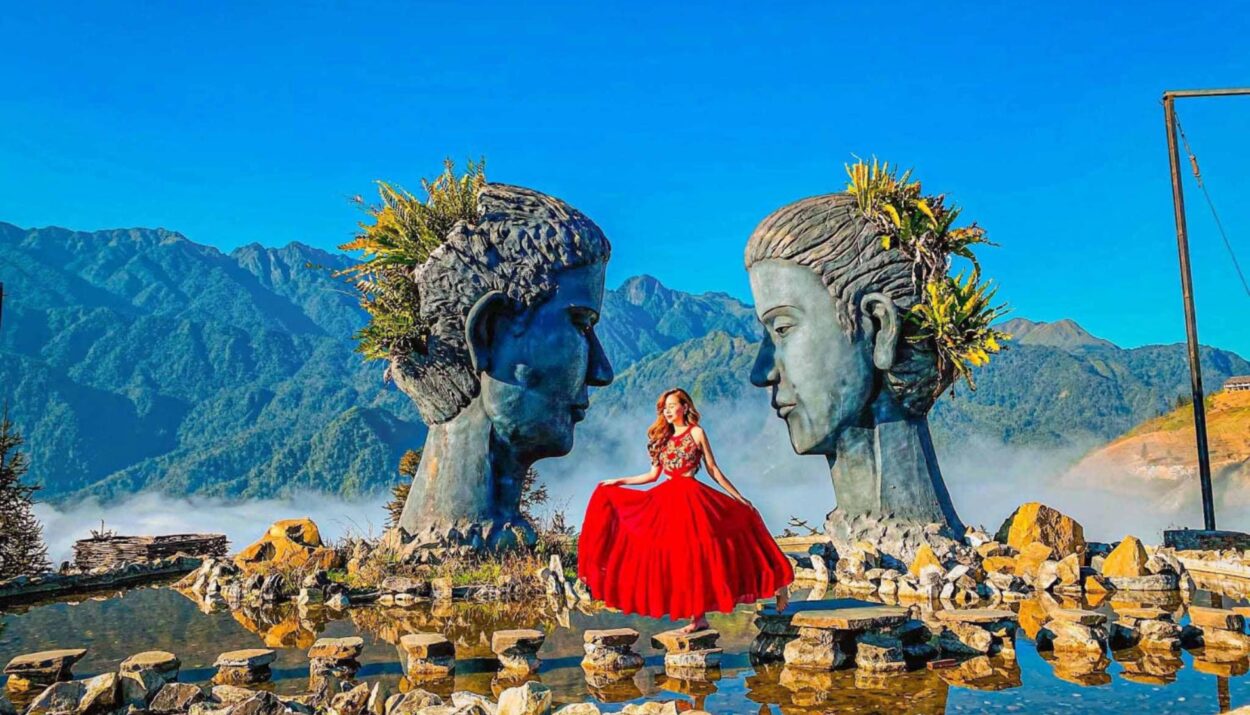
If you are looking for the ultimate Instagram-worthy spot in Sapa, Swing Sapa is the place to be. Located close to the town center, this popular attraction combines spectacular mountain views with a collection of creative photo spots designed to make your travel photos stand out.

Perched high above the town, Swing Sapa offers panoramic views toward the Hoang Lien Son mountain range and an impressive selection of photo-worthy installations. Among the most popular are the infinity swing, the Lonely Tree, the Silent Lovers statue, the giant floating hand, and the Stairway to Heaven.
Once you have taken enough photos, find a comfortable spot, order a refreshing drink, and simply enjoy the magnificent scenery around you. The crisp mountain air, dramatic views, and lively music create the perfect atmosphere to leave your worries behind.
If you are traveling with a friend who loves photography and Instagram-worthy destinations, Swing Sapa is definitely worth adding to your itinerary.
Swing Sapa
Address: Nguyen Chi Thanh Street, Sa Pa Town, Lao Cai
Reference ticket price: From VND 80,000 per person
2. Sun Plaza Sapa
Even if you are not a die-hard Sapa fan, you have probably seen the striking images of a colorful yellow-and-green clock tower appearing across Instagram and travel blogs. That iconic landmark is Sun Plaza Sapa.
Located right in Sapa Square, Sun Plaza is a large entertainment and tourism complex combining shopping, restaurants, cafés, entertainment facilities, and accommodation. Its distinctive European-inspired architecture makes it one of the most recognizable landmarks in the town center.
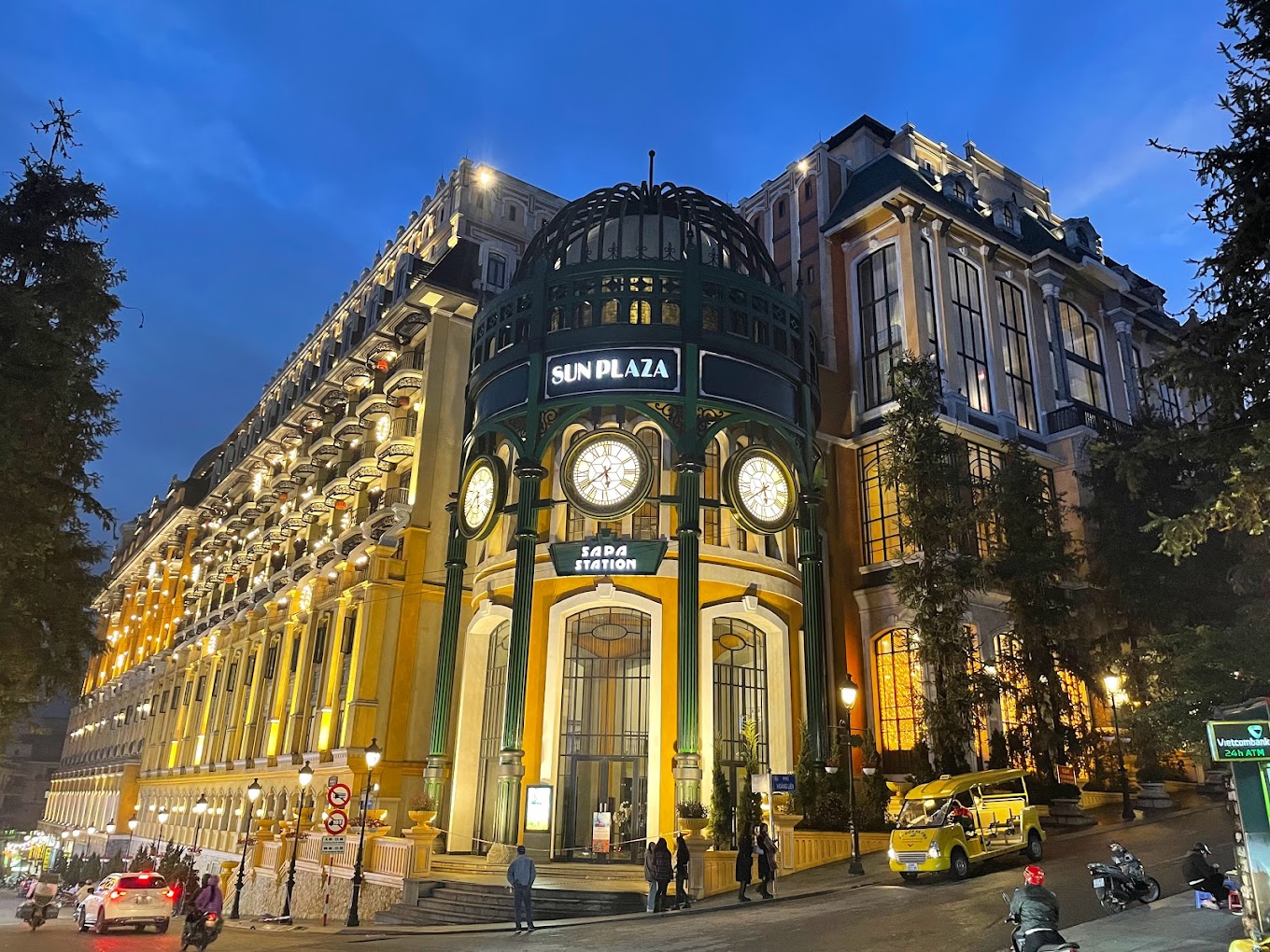
But Sun Plaza is more than just a photogenic building. It is also the starting point for the Muong Hoa Mountain Railway, which takes visitors toward the Fansipan cable car system and begins the journey to the legendary “Roof of Indochina.”
For many visitors, taking a photo in front of the impressive clock tower is almost an essential part of a trip to Sapa.
3. Rong May Glass Bridge
Located about 7 kilometers from Sun World Fansipan Legend and around 2 kilometers from Sapa’s mountain town area, the Rong May Glass Bridge offers a thrilling way to experience the spectacular Hoang Lien Son mountain range from above.
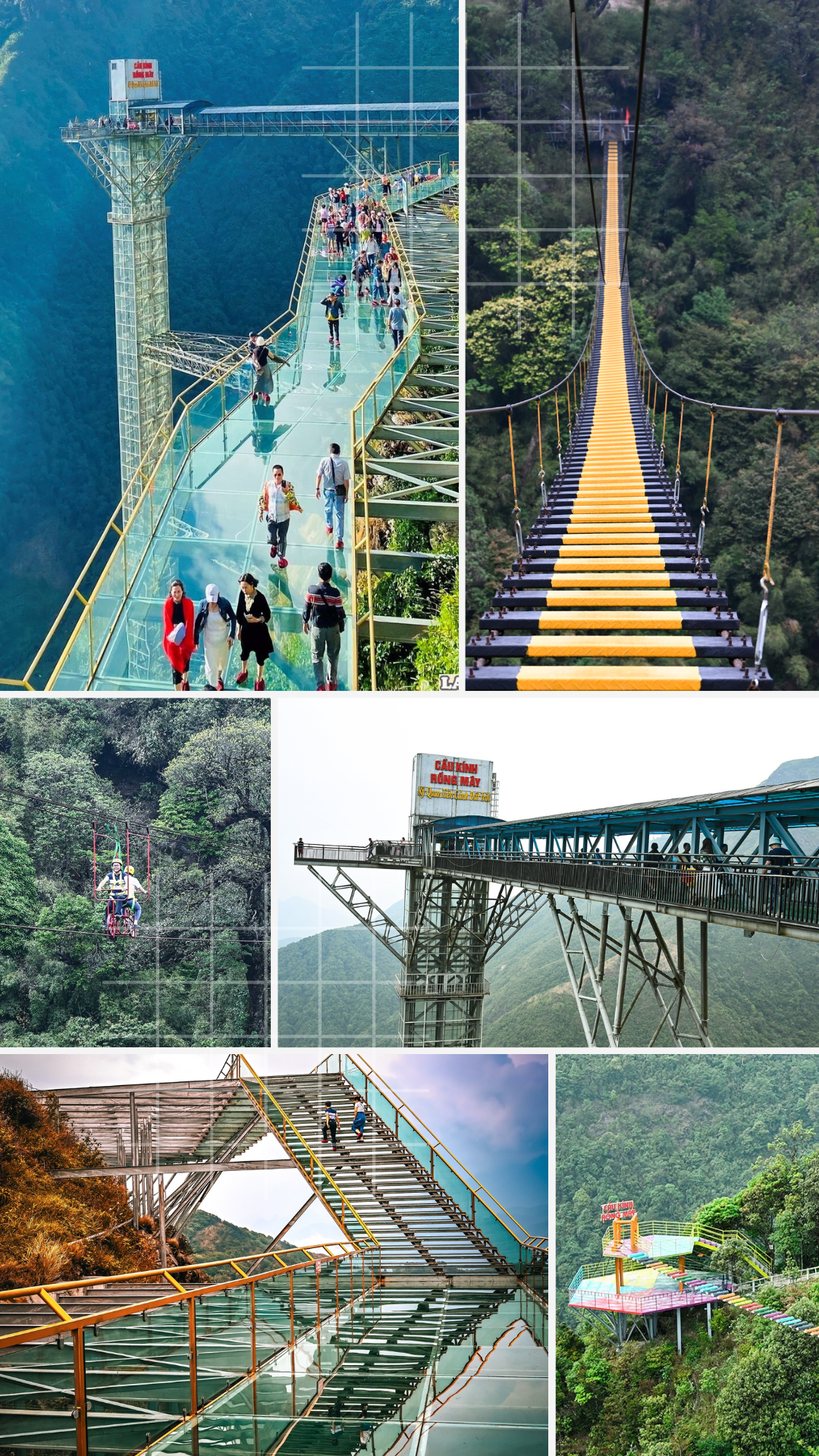
Situated on O Quy Ho Pass, one of Vietnam’s legendary mountain passes, the attraction sits at an elevation of approximately 2,200 meters above sea level.
The glass walkway extends around 60 meters outward from the mountainside, creating the exhilarating sensation of literally walking in the sky.
As you look through the transparent glass beneath your feet, the dramatic mountains and endless valleys stretch out far below. It is certainly not an experience for the faint-hearted — but for those brave enough to take the walk, the panoramic views and unforgettable photographs are more than worth it.
Reference ticket price: From VND 150,000 per person
4. O Quy Ho Pass
As mentioned above, O Quy Ho Pass is the longest and one of the most spectacular of Vietnam’s famous “Four Great Mountain Passes.” The pass connects Lao Cai and Lai Chau provinces and cuts dramatically through the Hoang Lien Son mountain range.
For travelers who love nature, road trips, and photography, O Quy Ho is essentially a treasure trove of unforgettable viewpoints and attractions.
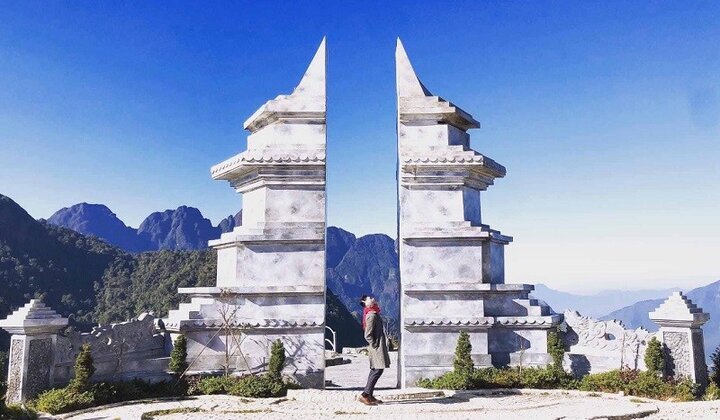
Along the route, you can discover Silver Waterfall, Love Waterfall, Sapa Heaven’s Gate, Rong May Glass Bridge, as well as numerous scenic cafés and charming mountain homestays.
Yet one of the greatest pleasures is simply stopping along the pass and watching the landscape change beneath the shifting mountain light. From the summit, roughly 15 kilometers from Sapa town, you can admire layer upon layer of mountains, valleys, forests, and clouds stretching toward the horizon.
The journey itself is part of the experience.
5. Sapa Heaven’s Gate
On your journey along O Quy Ho Pass, you will eventually reach Sapa Heaven’s Gate, one of the region’s most famous scenic viewpoints. The drive takes approximately 30–35 minutes from central Sapa, depending on road and traffic conditions.
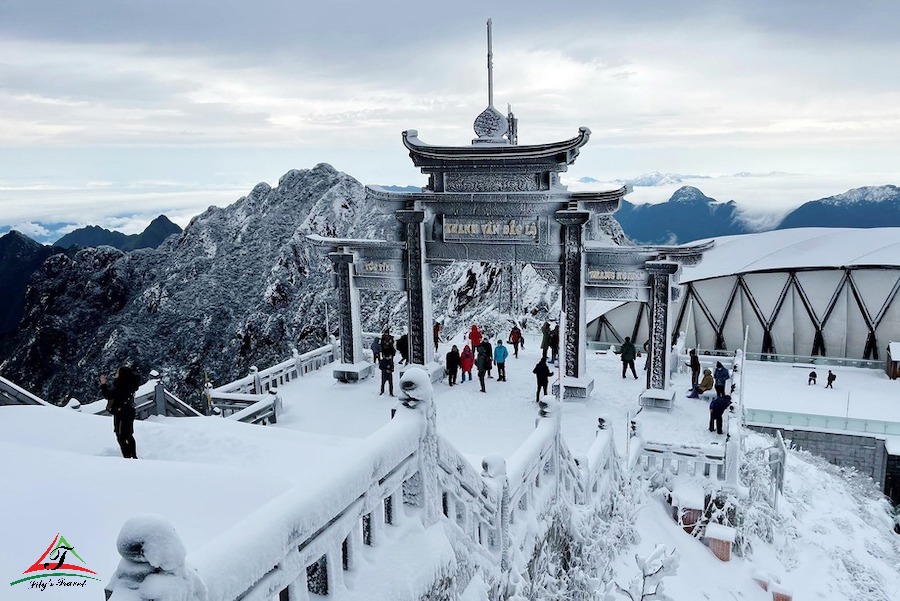
From this spectacular vantage point, winding mountain roads appear to weave through endless layers of hills and valleys, creating striking patterns across the landscape.
On clear days, the panoramic views are breathtaking. On misty days, clouds drift across the mountains, creating an entirely different atmosphere — mysterious, dreamlike, and distinctly Sapa.
For the best seasonal scenery, consider visiting during the following periods:
- Flower season: December–January and February–April
- Young rice season: May–July
- Rice harvest season: August–November
- Cloud-hunting season: November
Each season brings a different side of Sapa, making Heaven’s Gate worth visiting more than once if you have the opportunity.
6. Hau Thao, Sapa, Vietnam
Less famous than Cat Cat Village and less frequently included in trekking itineraries than Ta Phin or Lao Chai, Hau Thao offers a much quieter and more authentic side of Sapa.
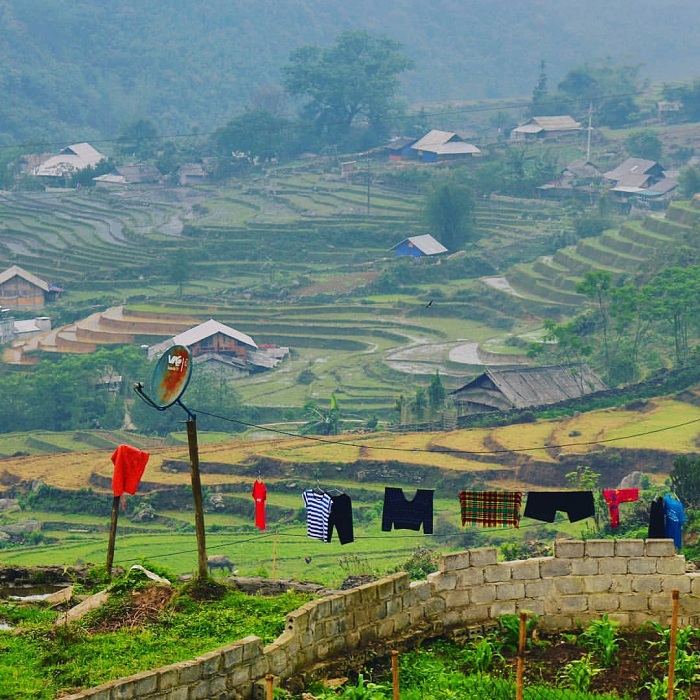
The area is home to the Hmong ethnic community and is often described as one of the places where visitors can still experience the original, unspoiled character of Sapa.
Hau Thao sits on a peaceful plateau beside a stream, surrounded by mountains, bamboo forests, terraced rice fields, and lush countryside. There are no grand attractions here — and that is precisely the charm.
To reach Hau Thao, travelers can trek or ride a motorbike along a scenic route from central Sapa through Y Linh Ho, Lao Chai San, Ta Van, the Bamboo Forest, Su Pan, and finally Hau Thao.
For travelers seeking peace, fresh mountain air, and an opportunity to escape the crowds, Hau Thao is an ideal place to slow down and reconnect with nature.
7. Sau Chua Village, Sapa, Vietnam
Some travelers worry that Sapa is gradually losing its original charm as more tourism-related developments appear across the region. But a visit to Sau Chua Village may completely change that perception.
Located in Sa Pa Ward, at the gateway to Sapa, Sau Chua is a peaceful Hmong village surrounded by mountains and natural landscapes. It offers a quieter alternative to some of Sapa’s more heavily visited attractions.
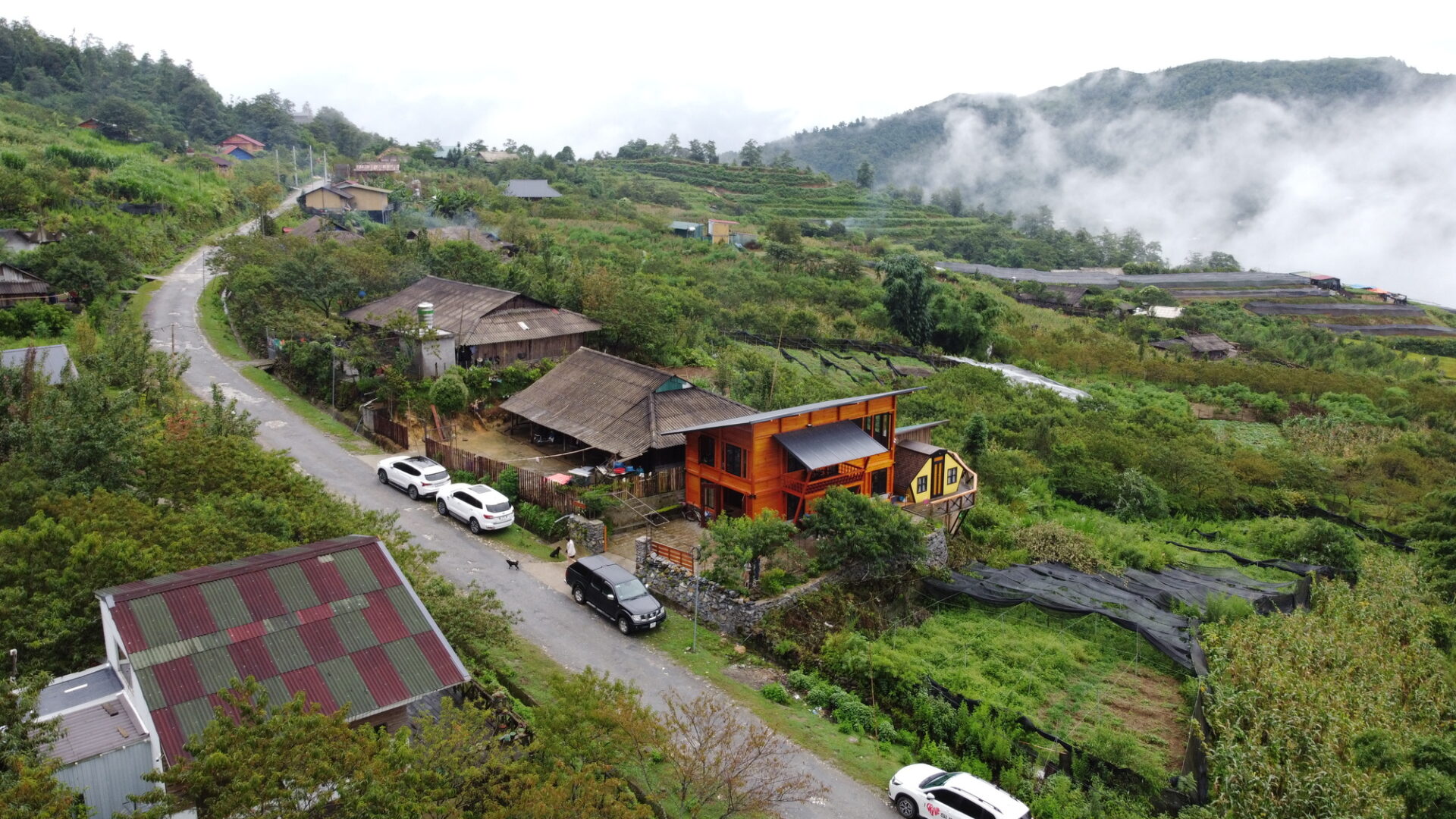
The village sits at an elevation of more than 200 meters above the town center, giving it a cool climate throughout much of the year. During winter and early spring, the village is often covered in mist, and snowfall can occasionally transform the landscape into a magical winter scene.
One of the most enjoyable experiences here is simply spending time with friends around a barbecue fire while watching the sun slowly disappear into a sea of clouds.
As the sky turns golden and the mountain landscape fades into the mist, Sau Chua reveals a quieter, more intimate side of Sapa — one that is perfect for travelers looking to escape the crowds and experience the mountain atmosphere at a slower pace.
8. Nam Cang Village – Sapa
Alongside Ta Phin Village and Muong Hoa Valley, Nam Cang Village is another wonderful destination for discovering Sapa’s spectacular terraced rice fields and untouched mountain scenery.
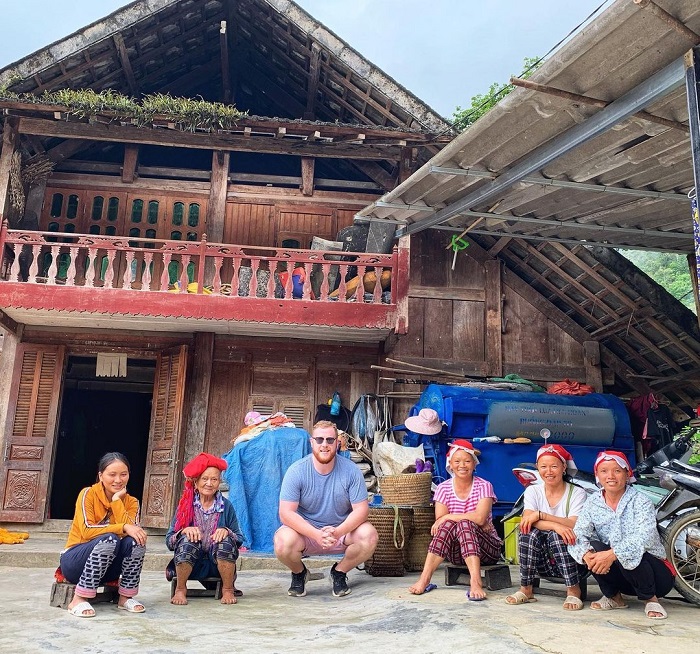
Located at the easternmost edge of Sapa District, approximately 30 kilometers from the town center, Nam Cang lies within the Hoang Lien Son National Park. Thanks to its pristine surroundings, the area is home to a remarkably rich ecosystem of forests, streams, plants, and wildlife.
Trekking through Nam Cang is an adventure in itself. Along the way, you can discover beautiful mountain streams and caves, cross rustic wooden bridges, and explore the peaceful countryside far from the crowds.
Although Nam Cang is not yet as famous as some of Sapa’s other attractions, its traditional character is precisely what makes it so appealing. The village offers a fascinating blend of Dao and Hmong cultures, surrounded by dramatic mountains and lush landscapes.
For travelers looking for an authentic and peaceful side of Sapa, Nam Cang is a destination well worth discovering.
9. Ma Tra Village
Located approximately 5 kilometers from Sapa town toward Lao Cai, Ma Tra Village is home to the Hmong ethnic community and is known for its beautiful landscapes and peaceful rural atmosphere.
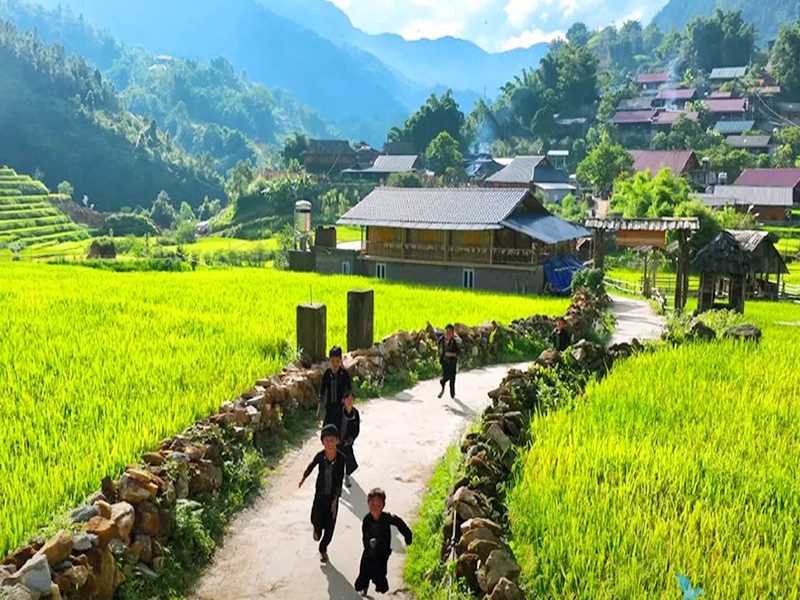
Seen from above, Ma Tra looks like a colorful landscape painting. Green terraced rice fields stretch across the hills, while simple traditional houses with rustic roofs are scattered among the surrounding countryside.
The village is also known for its strawberry gardens, where visitors can find plump, fragrant, and naturally sweet strawberries, particularly during the early months of the year.
A visit to Ma Tra offers a chance to slow down, admire the mountain scenery, and experience a quieter side of Sapa away from the busiest tourist areas.
10. Ta Phin Village
From Ma Tra Village, a roughly 7-kilometer walk will take you to Ta Phin Village, a peaceful mountain community famous for its warm and welcoming Red Dao people.
The cultural identity of Ta Phin comes to life through traditional performances and local activities, including the Bai Tram dance, bell dancing, traditional games, and folk courtship songs.
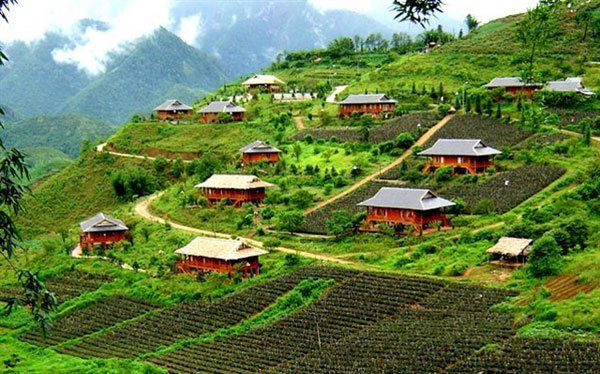
Beyond its cultural experiences, Ta Phin is also a wonderful place to immerse yourself in the dramatic landscapes of Vietnam’s Northwest mountains.
Take time to explore Ta Phin Cave, admire the endless rice fields, or simply listen to the sound of streams flowing through the village and surrounding countryside.
The combination of traditional culture, mountain scenery, and peaceful village life makes Ta Phin one of the most rewarding destinations around Sapa.
11. Ta Van Village
It would be hard to overstate the appeal of Ta Van Village, one of the most beautifully situated destinations in the Sapa region.
Facing the winding landscapes of Muong Hoa Valley and backed by the majestic Hoang Lien Son mountain range, Ta Van offers a perfect introduction to the soul of Vietnam’s Northwest highlands.
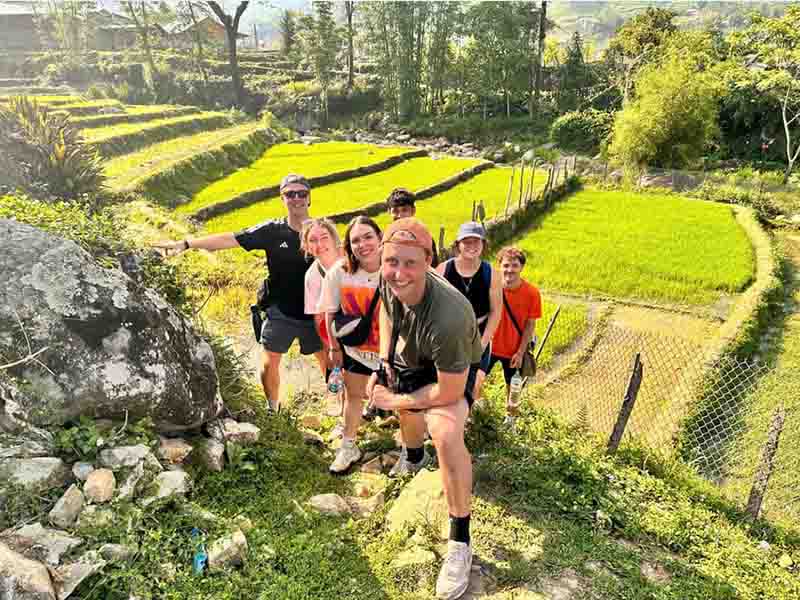
The name “Ta Van” is traditionally interpreted as meaning “large arc,” a description that seems fitting for the graceful curves of the surrounding mountains and valleys.
Unlike some of Sapa’s busier attractions, Ta Van retains a relaxed and welcoming atmosphere. The village is home to Hmong, Red Dao, and Giay communities, who warmly welcome visitors with fresh local produce, fragrant corn wine, and fascinating stories about life in the highlands.
Before leaving, be sure to browse the village’s handmade crafts. Traditional textiles, embroidery, and other locally made products make wonderful souvenirs and lasting reminders of your journey through Sapa.
12. Lao Chai Village
Nestled deep within Muong Hoa Valley, Lao Chai Village is affectionately known by many travelers as the “muse of the Northwest.”
The best times to visit are generally April to June, when the terraced fields are filled with water and reflect the sky like giant mirrors, or September to October, when the rice fields turn golden during harvest season.
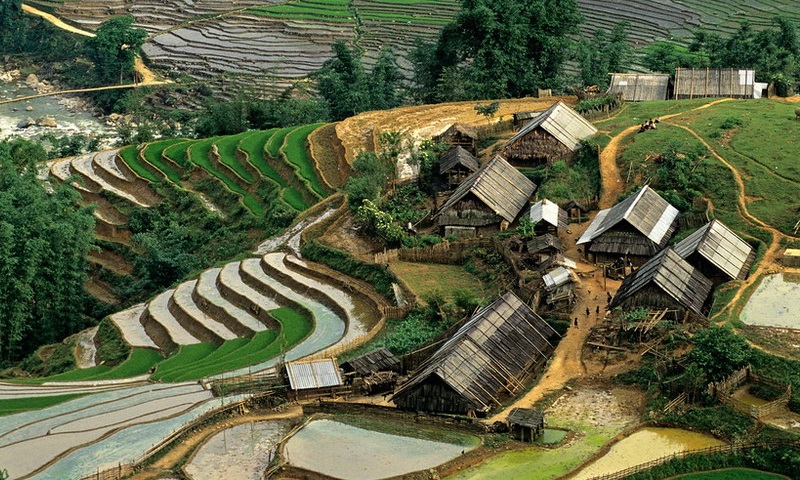
Toward the end of the year, Lao Chai transforms into a breathtaking landscape of golden rice terraces surrounded by layers of mountains.
When white mist drifts through the valleys and settles over the hills, the combination of golden fields, rugged mountains, and clouds creates an almost dreamlike scene — one that feels more like a painting than reality.
For photographers and nature lovers, Lao Chai is one of the most rewarding places to experience the changing seasons of Sapa.
13. Cat Cat Village
Cat Cat Village is a dream destination for anyone who loves photography, traditional culture, and picturesque mountain landscapes.
This small Hmong village is packed with photogenic corners from beginning to end. One of its most beautiful areas is the Cat Cat Waterfall and stream, where giant traditional water wheels stand beside simple wooden houses surrounded by wildflowers and lush vegetation.
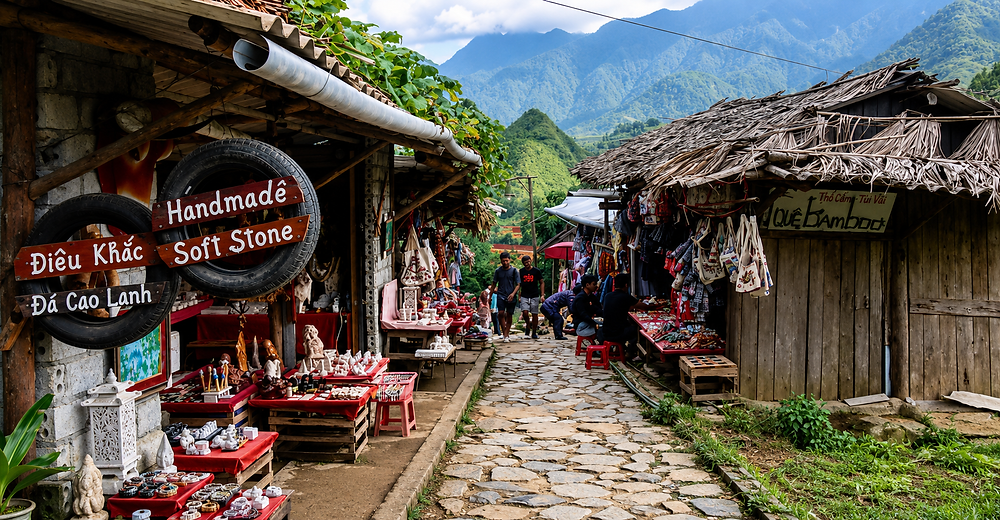
With its nostalgic atmosphere and rustic architecture, Cat Cat has a timeless beauty that can rival some of the world’s most famous old towns.
But the village offers more than beautiful photographs. Visitors can gain a closer look at the daily life of the local Hmong community and discover traditional objects and tools once commonly used in the Northwest highlands, including rice mills, traditional lanterns, and equipment used for weaving hemp fabric.
For an even more memorable experience, rent a traditional ethnic costume and explore the village dressed in colorful local clothing. It is a fun way to immerse yourself in the culture while capturing some unforgettable travel photos.
14. Sin Chai Village
Nestled at the foot of the Hoang Lien Son mountain range for more than a century, Sin Chai Village, also known as Xin Chai, is a peaceful destination that continues to captivate visitors with its untouched beauty.
May and June are among the best times to visit. During this period, water begins flowing down from the high mountains and makes its way into the newly planted terraced rice fields. Under the warm golden sunlight, the flooded terraces reflect the sky like enormous natural mirrors.
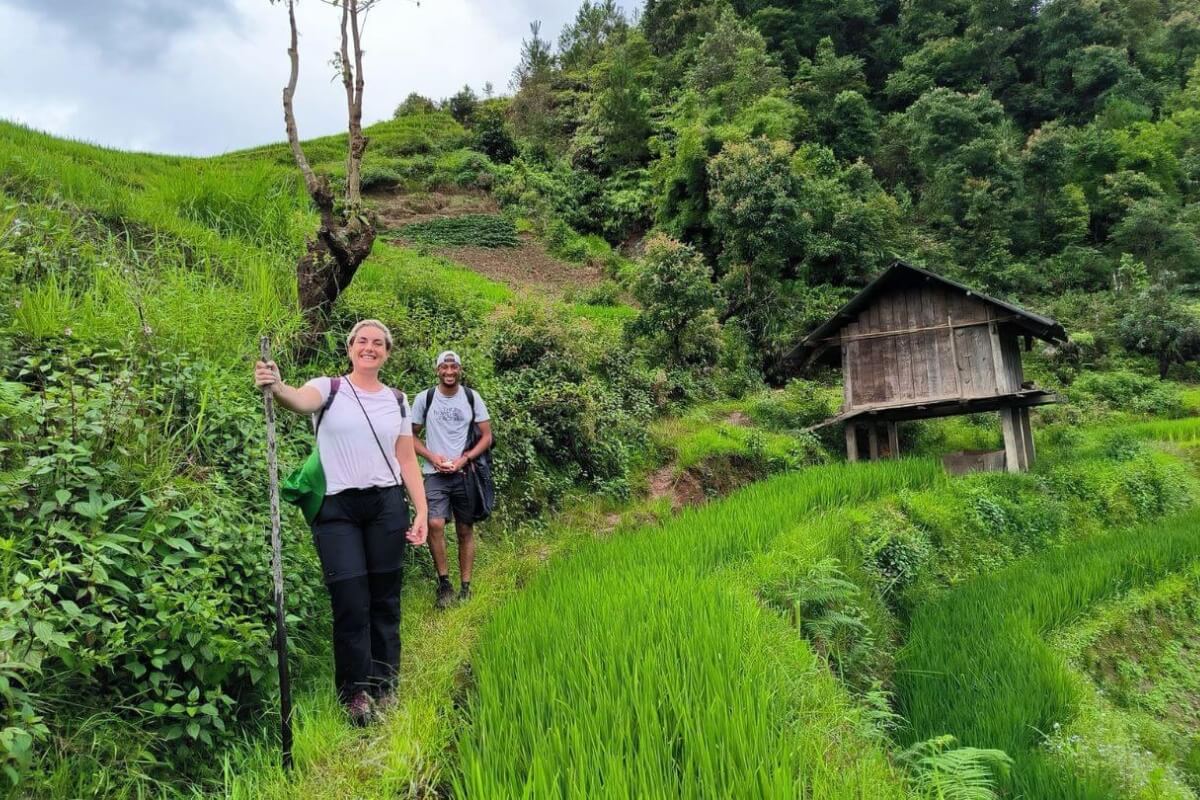
The normally tranquil landscape becomes remarkably vibrant, with water, mountains, clouds, and young rice fields creating a spectacular seasonal panorama.
If you want to photograph the valley covered in golden rice, plan your visit for September or October, when the terraces reach harvest season.
Another interesting fact about Sin Chai is that it is considered the largest village in Sapa by area and is primarily home to the local Hmong community.
15. Silver Waterfall
Originating from the upper reaches of the Muong Hoa stream, Silver Waterfall is one of Sapa’s most famous natural attractions.
Standing approximately 200 meters high, the waterfall cascades dramatically down the mountainside and is located along National Highway 4D, around 12 kilometers from Sapa town. It can be easily reached by motorbike or private car.
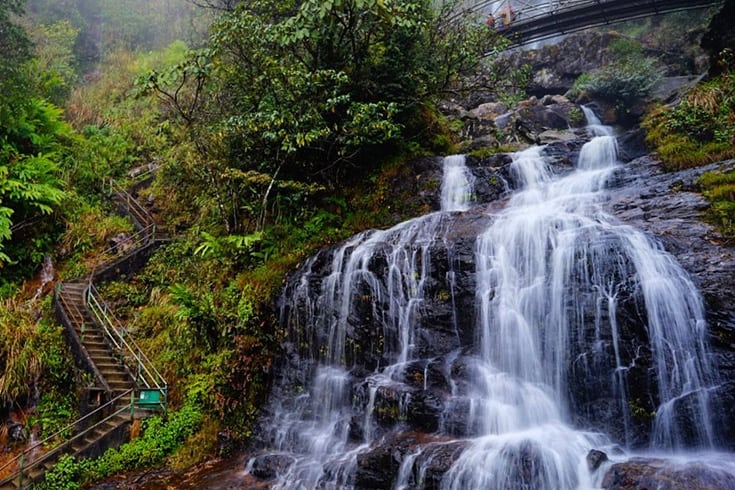
From a distance, Silver Waterfall resembles a long ribbon of white silk scattered with sparkling droplets, flowing down from the mountains and standing out dramatically against the deep green pine forests.
As you approach the waterfall, the roar of rushing water gradually replaces the sounds of traffic and everyday life. Take a moment to stand among the trees, listen to the flowing stream, and breathe in the crisp mountain air.
It is the kind of place where the pace of life seems to slow down — allowing you to simply enjoy the soothing power of nature.
16. Love Waterfall Sapa
With such a romantic name, few people would expect the legend behind Love Waterfall to be a touching love story filled with tears between a woodcutter named O Quy Ho and a beautiful fairy.
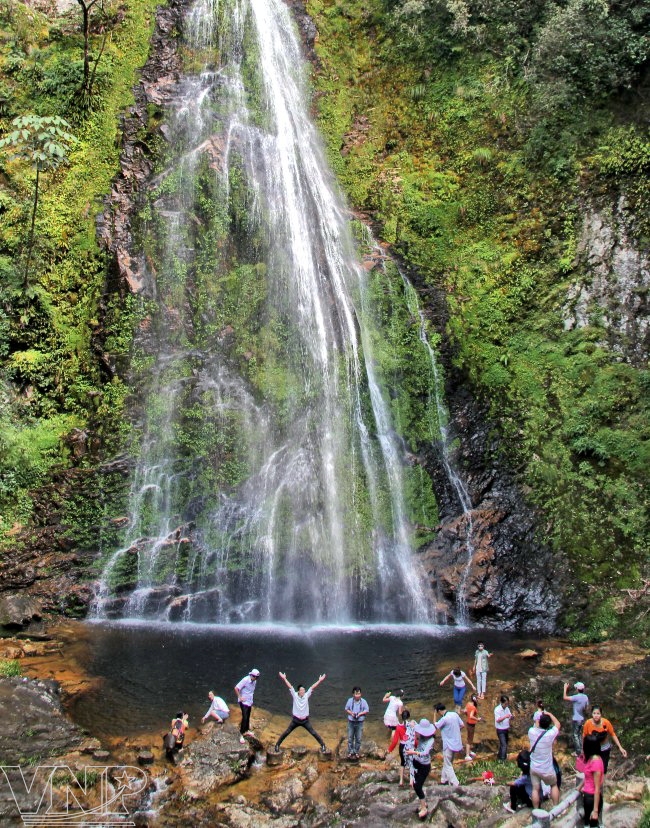
The journey to Love Waterfall takes you along a scenic 300-meter trail beside the Golden Stream. Along the way, you will be surrounded by lush vegetation, colorful rhododendron flowers, and a diverse range of plants and wildlife.
The peaceful setting and romantic legend make Love Waterfall one of the most memorable natural attractions to visit around Sapa.
17. Ham Rong Mountain, Sapa
If you’re wondering where to go in Sapa, Ham Rong Mountain is an excellent choice. This ecological tourism area covers approximately 148 hectares, with its highest point reaching around 1,800 meters above sea level.
The trek to the summit takes about an hour and is considered moderately challenging. Most of the route has been developed with stone steps, making the climb relatively accessible for visitors.
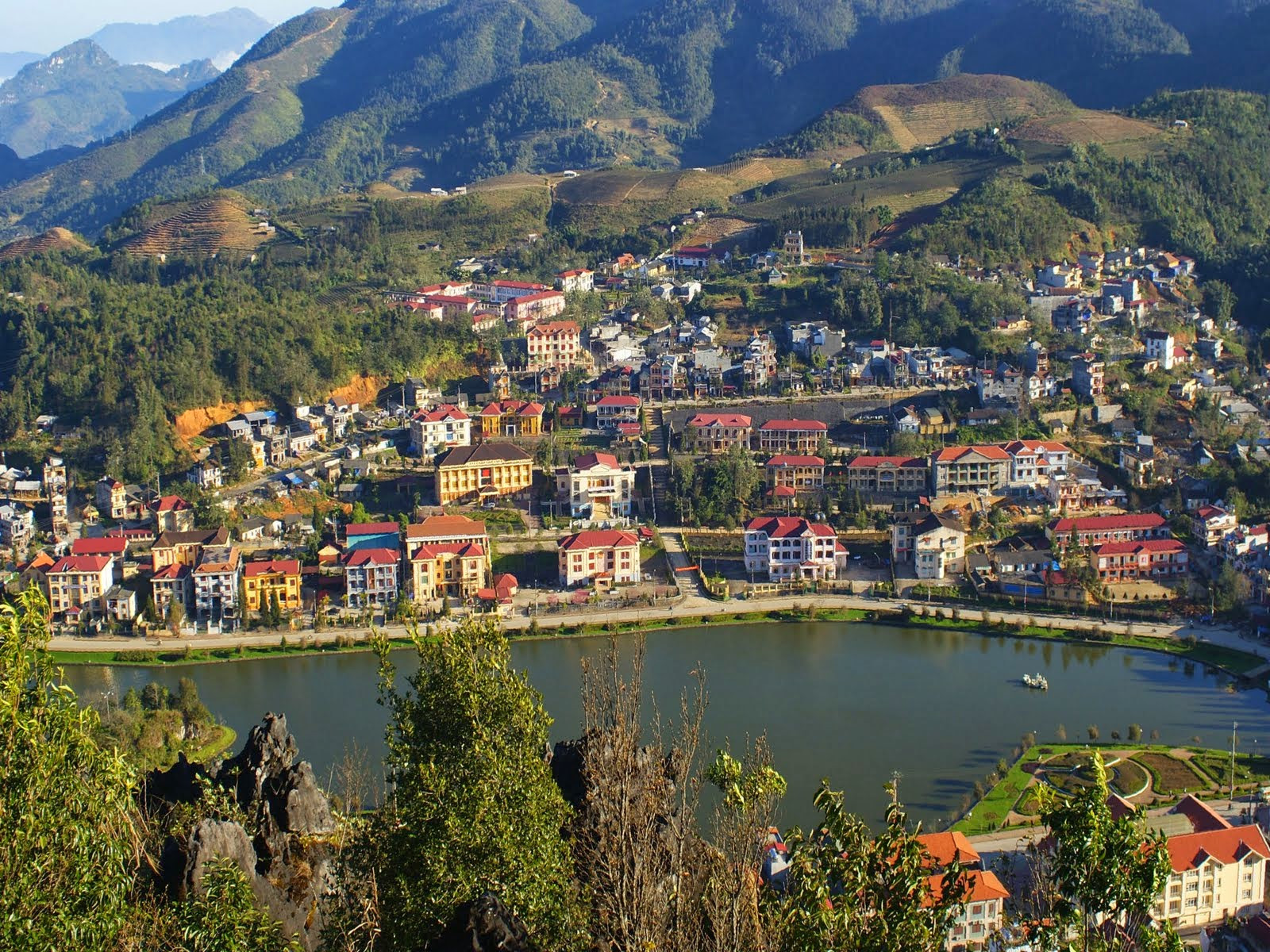
Along the way, you can explore several well-known Sapa attractions, including Heaven’s Gate, Cloud Yard, Ham Rong Flower Garden, and the Telecommunications Station before reaching the mountain summit.
Ham Rong Mountain offers a harmonious combination of wild natural landscapes and carefully designed gardens and viewpoints. The result is a fascinating setting that feels both majestic and untouched, while retaining a distinctly romantic atmosphere.
18. Sun World Fansipan Legend Sapa
One of Sapa’s most beloved attractions, Sun World Fansipan Legend has never lost its sense of wonder. Located around 3,143 meters above sea level, the landscape here can change dramatically throughout the day. One moment, the mountain may be shrouded in mysterious white clouds and mist; moments later, it can become bright and crystal clear under the sunlight.
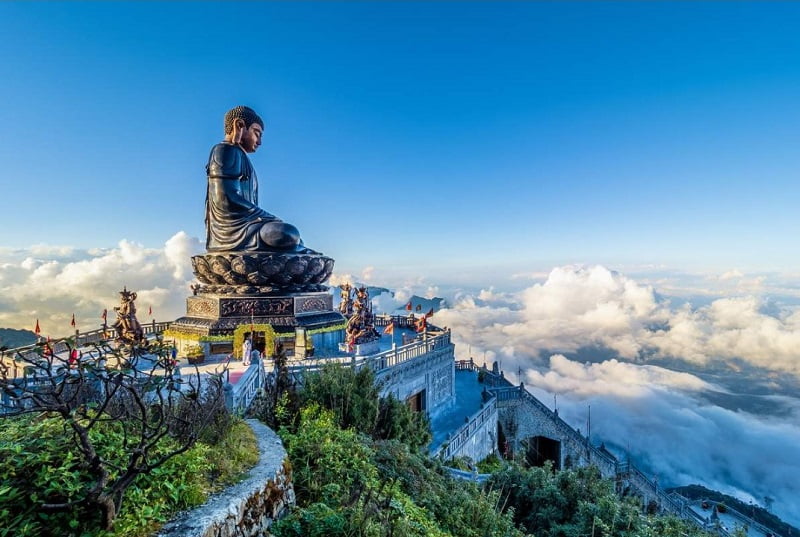
A visit to Sun World Fansipan Legend also gives you the chance to experience the cable car system that once simultaneously held three world records for being among the highest, longest, and most modern cable car systems in the world.
There is much more to discover, from riding a mountain railway through fields of flowers and enjoying a coffee beneath the highest flagpole in Indochina to visiting one of Vietnam’s largest high-altitude spiritual complexes.
For many travelers, the combination of spectacular mountain scenery, unique transportation experiences, and cultural attractions makes Sun World Fansipan Legend a highlight of any Sapa itinerary.
19. Bac Ha Market, Lao Cai
Bac Ha Market is located in the center of Bac Ha Town in Lao Cai Province and is one of the most vibrant traditional markets in the mountainous Northwest of Vietnam.
The market is divided into several sections, with different areas dedicated to different types of goods. The central section features local agricultural products, fresh food, household items, and everyday necessities.
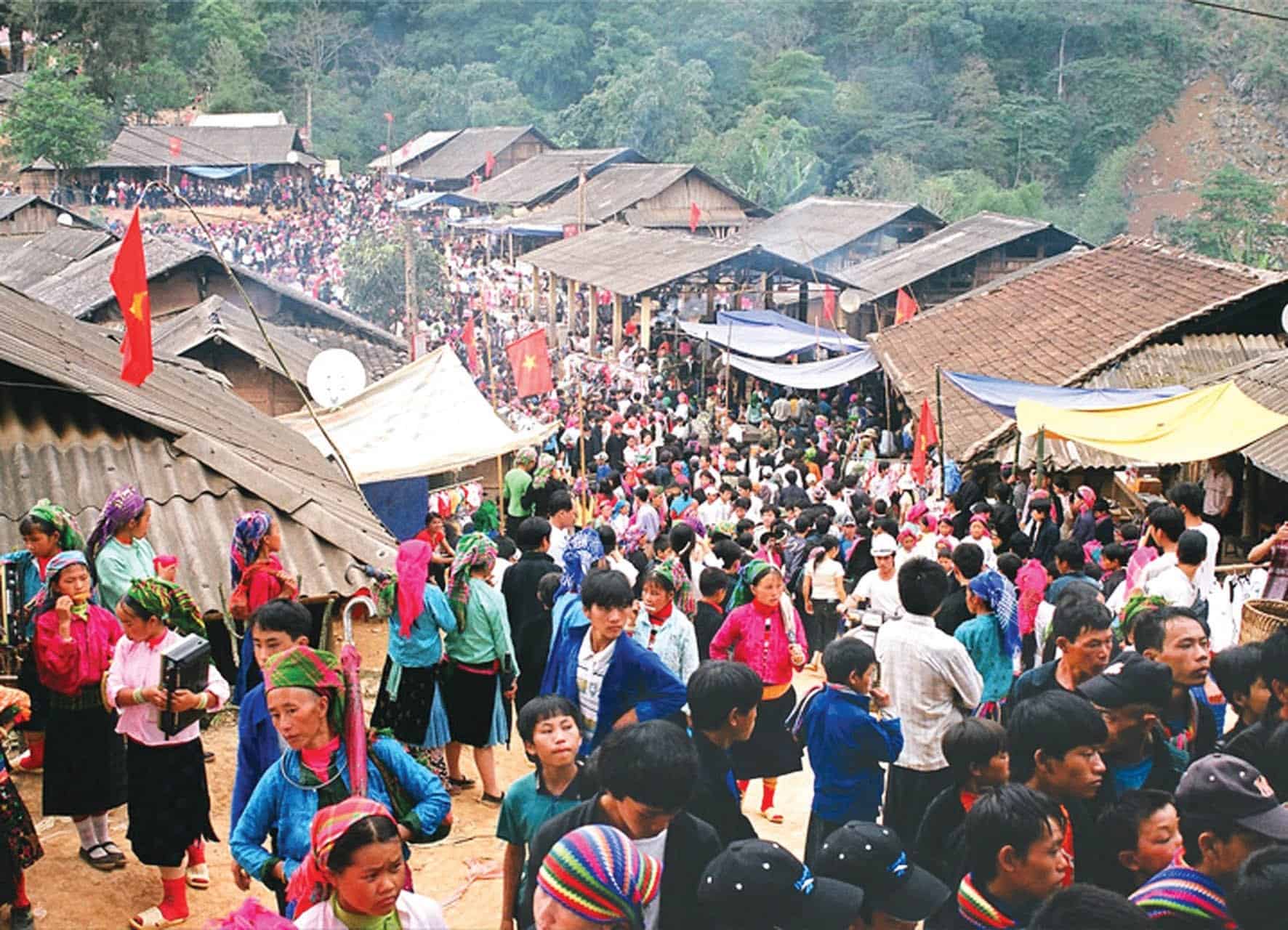
On the eastern side, you will find colorful fabrics and traditional clothing made by various ethnic minority communities. The western section focuses on handicrafts, handmade products, and souvenirs.
Bac Ha Market takes place every Sunday and attracts thousands of local residents and visitors. Beyond shopping, it is a fascinating place to experience the daily life, traditions, colors, and cultural diversity of the ethnic communities living in northern Vietnam.
20. Ban Pho Village, Lao Cai
Ban Pho Village is a highland commune in Bac Ha District, Lao Cai Province, located approximately 4 kilometers from Bac Ha Town. It is one of the best-known traditional villages in Vietnam’s Northwest.
The village has a long history and is home to the Hmong people, whose distinctive cultural traditions have been preserved and passed down through generations.
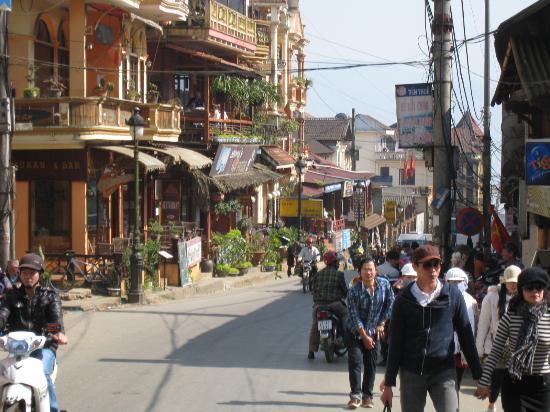
One of the most remarkable aspects of Hmong culture in Ban Pho is traditional embroidery. Local artisans are known for their intricate embroidery techniques, which can be seen on traditional clothing, scarves, and other handmade textiles. These beautifully crafted products are highly appreciated and are sold in many parts of Vietnam.
The Hmong people of Ban Pho also have unique traditional dances, which are often performed during festivals and important cultural celebrations. These performances reflect the rich identity and heritage of the Hmong community.
A visit to Ban Pho Village offers more than beautiful mountain scenery. It is also an opportunity to experience the traditional lifestyle, craftsmanship, festivals, and cultural heritage of one of the most fascinating ethnic communities in northern Vietnam.




Leave a Reply