Hoi An Travel Tips: Everything You Need to Know Before Your Trip
The travel experiences shared by those who have explored Hoi An before are a true treasure trove of practical knowledge. From wandering through the charming Ancient Town and discovering traditional craft villages to sampling the local cuisine, a little insider advice can make your journey much easier and more enjoyable.
Before you set off for this UNESCO-listed heritage destination, here are some essential Hoi An travel tips worth keeping in mind.
Quick Guide to Traveling to Hoi An
- Getting there: Fly to Da Nang, then take a taxi or bus to Hoi An (around 30 km away), or travel by train, coach, or private vehicle.
- Getting around Hoi An: Bicycle, motorbike, cyclo, taxi, boat, and local river cruises.
- Best time to visit: The dry season, from February to August.
- Top experiences: Hoi An Ancient Town (historic assembly halls, old pagodas, the Hoai River), VinWonders Nam Hoi An, An Bang Beach, Bay Mau Coconut Forest, Thanh Ha Pottery Village, My Son Sanctuary, and more.
- Must-try foods: Sweet soups, cao lau, banh mi, Mot herbal tea, Hoi An chicken rice, banh dap with stir-fried baby clams, and white rose dumplings.
- Best souvenirs: Green bean cakes, colorful lanterns, silk products, and traditional to he figurines.
- Beautiful cafés: Cocobana, Hoi An Roastery, The Chef, and Cocobox.
- Estimated budget: Around VND 4.5–5 million per person for a 3-day, 2-night trip.
Hopefully, these independent Hoi An travel tips will help you feel prepared rather than overwhelmed when planning your trip. With the right itinerary and a little advance preparation, you can enjoy Hoi An at your own pace and return home with plenty of unforgettable memories.
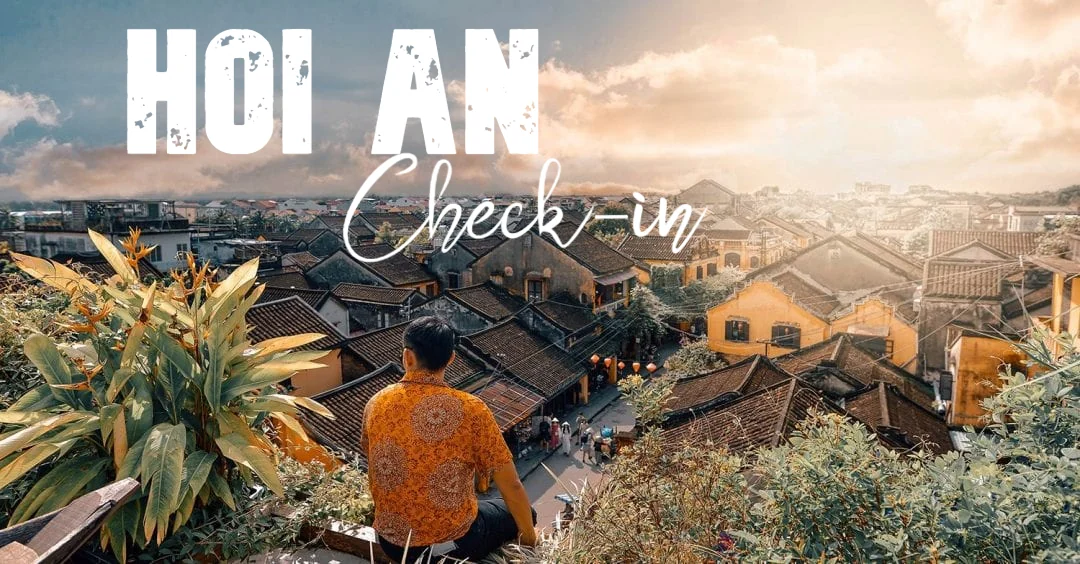
1. When Is the Best Time to Visit Hoi An?
According to experienced travelers and Hoi An enthusiasts, every season has its own charm in Hoi An. However, if you are looking for the most pleasant weather and ideal conditions for exploring the Ancient Town, the period from February to April is generally considered the best time to visit.
Here is what you can expect throughout the year:
Dry Season: February–August
February to April:
This is one of the best times to visit Hoi An. The weather is pleasantly cool in early spring, the sunshine is gentle, and rainfall is relatively limited—perfect conditions for strolling through the Ancient Town, cycling through the countryside, or exploring nearby attractions.
May to August:
Summer brings plenty of sunshine and relatively little rain, making it a popular period for beach trips and outdoor activities. However, some days can be quite hot, so visitors should prepare for strong midday sunshine and plan outdoor activities accordingly.
Rainy Season: September–January
From September through January, Hoi An typically experiences more frequent and sometimes prolonged periods of rain. If you are planning a trip during these months, keep a close eye on the weather forecast and plan your itinerary with some flexibility.
2. How to Get to Hoi An
By Air
Flying is the fastest and most convenient way to reach Hoi An from major cities in Vietnam.

There is no commercial airport in Hoi An, so travelers from Ho Chi Minh City or Hanoi can fly to Da Nang International Airport and then continue to Hoi An by taxi, private car, or bus. The flight itself takes roughly one hour, while one-way fares typically range from around VND 400,000–1,600,000, depending on the airline, route, and booking period.
Besides flying, there are several other ways to reach Hoi An:
By Train 🚂
For travelers who prefer a slower and more scenic journey, taking the train can be an interesting option. Trains from Ho Chi Minh City or Hanoi typically stop at Da Nang Railway Station or Tra Kieu Station, after which you can continue to Hoi An by road.
The journey generally takes around 15–20 hours, with fares ranging from approximately VND 230,000–2,224,000 per trip, depending on the route and type of seat or berth.
By Bus 🚌
Long-distance sleeper buses are another affordable way to reach Hoi An. Direct services are available on routes such as Ho Chi Minh City–Hoi An and Hanoi–Hoi An.
Ticket prices generally range from around VND 320,000–480,000 per trip, making buses a popular choice for budget-conscious travelers.
By Private Vehicle
Traveling by car or motorbike can be an exciting option, especially for adventurous travelers or those living in provinces near Hoi An, such as Da Nang and Quang Ngai.
A road trip gives you greater freedom to stop along the way, explore lesser-known places, and enjoy the scenery at your own pace.
3. How to Get Around Hoi An
Once you arrive, getting around Hoi An is relatively easy. Depending on your itinerary and preferred travel style, you can choose from bicycles, motorbikes, cyclos, taxis, or boats.
By Bicycle 🚲
A bicycle is arguably one of the best ways to experience Hoi An.
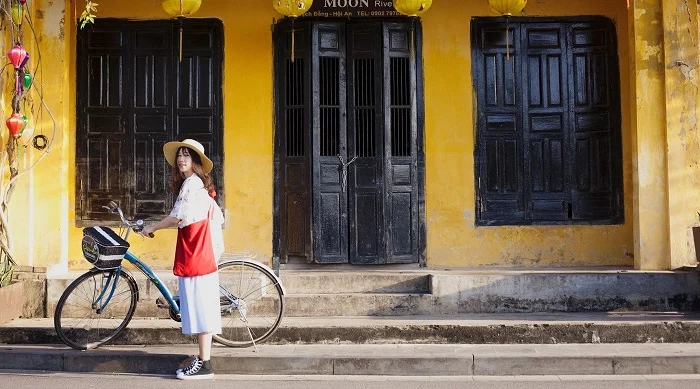
Cycling through the quiet streets, enjoying the breeze, and watching everyday life unfold around you allows you to experience the town at a wonderfully relaxed pace. Many hotels and homestays offer bicycles free of charge to guests, while rental bicycles generally cost around VND 40,000 per day.
By Motorbike 🏍
Renting a motorbike gives you the freedom to explore Hoi An and its surrounding attractions on your own schedule.
Motorbike rentals are widely available, with prices typically starting at around VND 120,000–150,000 per day. This is particularly convenient if you plan to visit destinations outside the Ancient Town, such as beaches, craft villages, and countryside attractions.
By Cyclo
The traditional cyclo is one of the most recognizable sights in Hoi An Ancient Town. Taking a leisurely cyclo ride offers a charming and memorable way to see the historic streets without rushing.
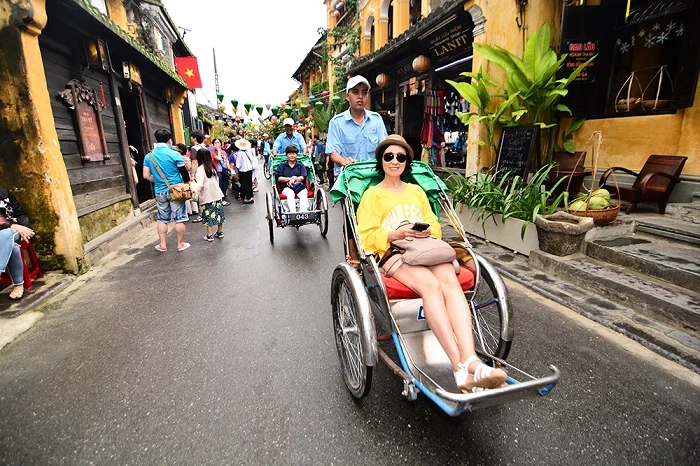
Based on local travel experience, you can usually find cyclos around Phan Chau Trinh and Tran Phu Streets, with a typical market rate of approximately VND 150,000 per cyclo per hour.
By Taxi 🚖
Taxis are a convenient choice when traveling between attractions, especially for families, groups, or visitors carrying luggage.
Several familiar and reputable taxi companies operate in Hoi An. However, it is advisable to check the fare structure before starting your journey.
As a general reference, a four-seat taxi may cost around VND 11,000–15,000 per kilometer for journeys up to 30 km, and approximately VND 9,000–12,000 per kilometer for distances beyond 31 km.
By Boat 🛥
A boat ride along the Hoai River or Thu Bon River is an experience you should not miss when visiting Hoi An. Seeing the town from the water offers an entirely different perspective, particularly around sunset or in the evening when the lanterns begin to glow.
Boats can be easily found at the river piers around the Ancient Town. On quieter weekdays, a small boat for two people may cost around VND 50,000, while during peak periods, a boat for up to four people may cost approximately VND 200,000 for a 20-minute ride.

For many visitors, a peaceful boat ride on the river—surrounded by the warm glow of Hoi An’s lanterns—is one of those simple experiences that stays with them long after the trip is over.
What to Eat in Hoi An? A Guide to the Best Local Specialties
Hoi An is famous not only for its beautifully preserved architecture and peaceful old-world atmosphere, but also for its incredible food scene. From iconic local noodles and fragrant chicken rice to colorful street snacks and refreshing herbal drinks, Hoi An’s cuisine is an essential part of the experience.
Here are some of the local specialties you should not miss.
Cao Lau 🍝
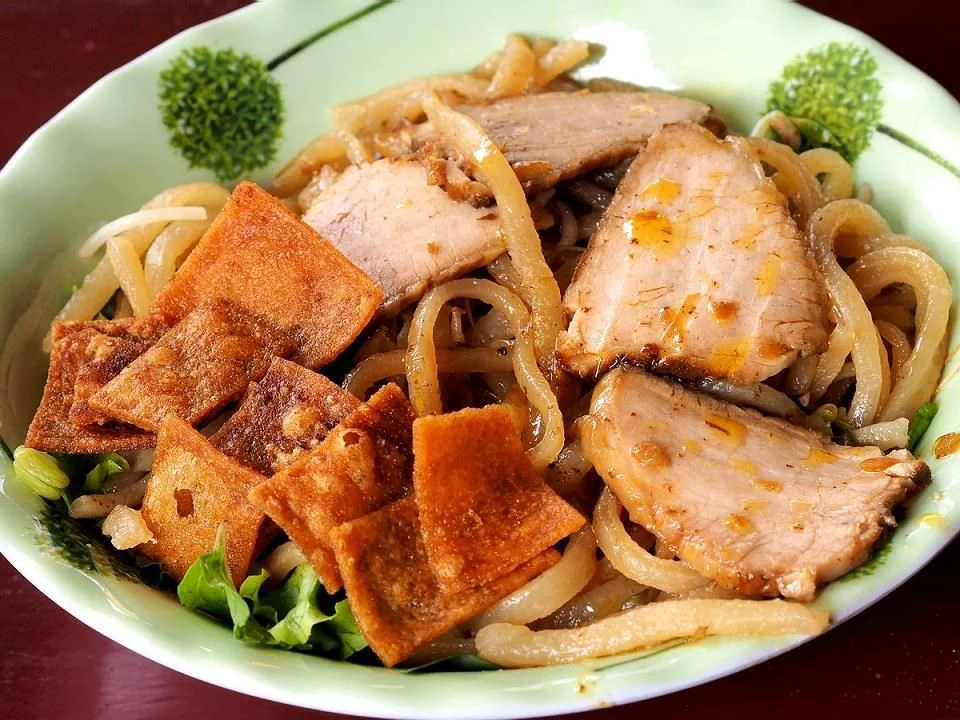
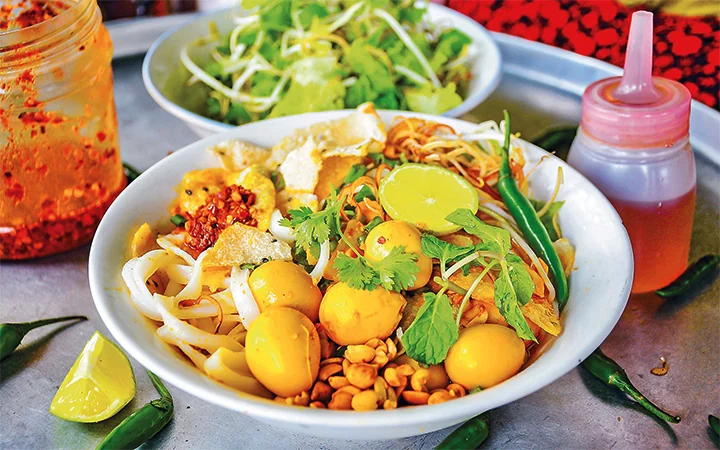
Hoi An Cao Lau is one of the city’s most iconic dishes. At first glance, it may look somewhat similar to Mi Quang, but the noodles are thicker and chewier, while the rich, savory sauce gives the dish its own distinctive character.
Popular places to try Cao Lau include:
- Lien Cao Lau: 9 Thai Phien Street
- Ba Be Cao Lau: Hoi An Market
- Thanh Cao Lau: 26 Thai Phien Street
Hoi An Chicken Rice 🍝
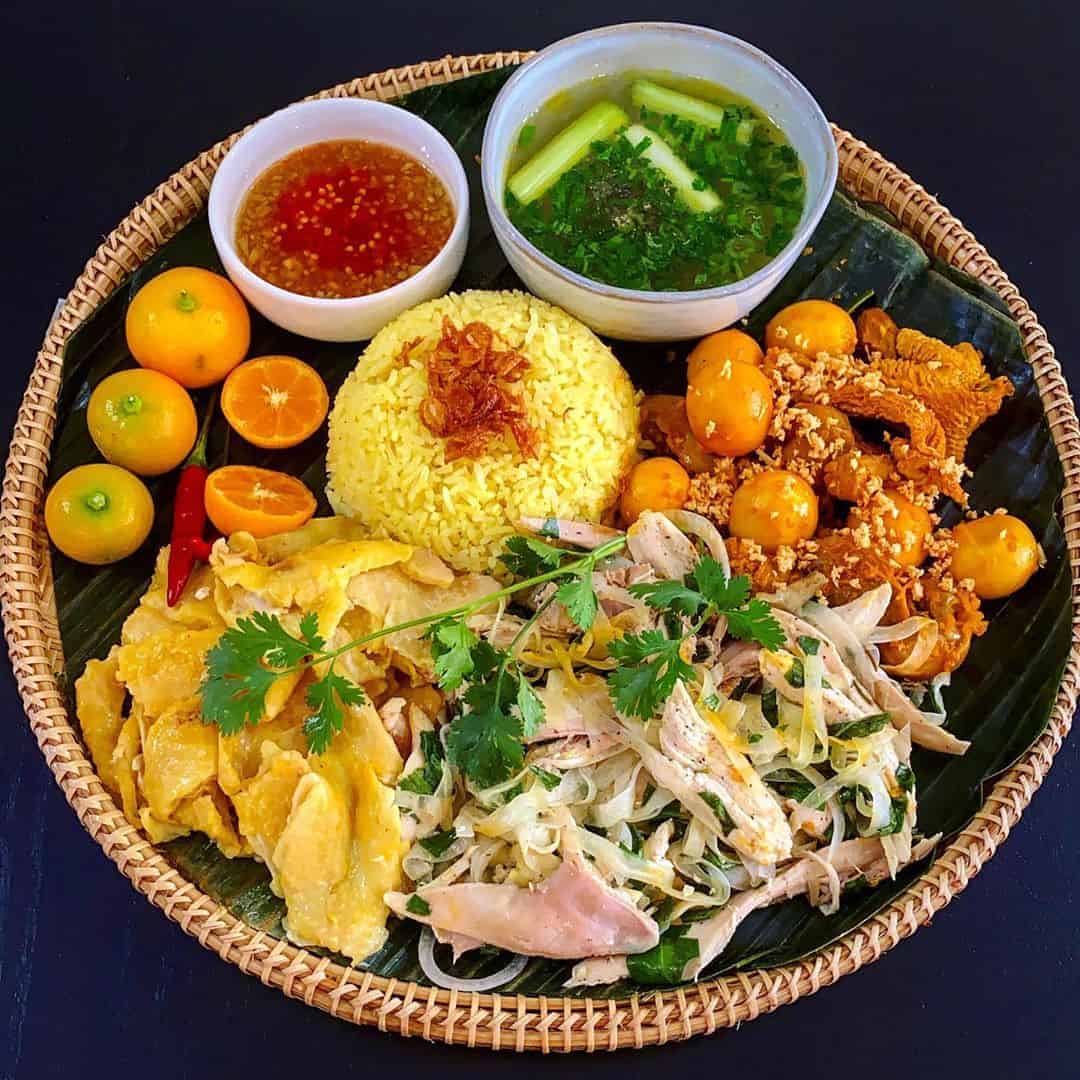
According to food-loving travelers, Hoi An chicken rice is an absolute must-try when visiting the Ancient Town.
The preparation is what makes it special. The rice is fragrant and tender, while the chicken has a firm, satisfying texture. Everything comes together beautifully with a rich black pepper sauce, creating a simple yet incredibly flavorful dish.
Recommended places include:
- Ba Buoi Chicken Rice: 22 Phan Chu Trinh Street
- A Ty Chicken Rice: 25–27 Phan Chu Trinh Street
Phu Chiem Mi Quang 🍝
This is another beloved specialty of the Hoi An region. The dish features soft white rice noodles served with a richly flavored broth traditionally prepared with fresh shrimp and freshwater crab.
It is typically enjoyed with crispy golden rice crackers, adding a satisfying crunch to every bite.
Popular places to try it include:
- Di Hat Mi Quang: 4 Phan Chau Trinh Street
- Chu Hai Mi Quang: 6A Truong Minh Luong Street
Banh Mi Phuong 🍝
Banh Mi Phuong is one of Hoi An’s most famous food stops and has earned a reputation among international food lovers for serving some of the city’s best banh mi.
The appeal lies in the perfect balance between the crisp, golden crust, soft interior, flavorful fillings, and carefully prepared sauces. Every ingredient works together remarkably well, making this humble Vietnamese sandwich an unforgettable street-food experience.
Banh Mi Phuong: 2B Phan Chu Trinh Street, Hoi An East Ward

Madam Khanh Banh Mi 🍝
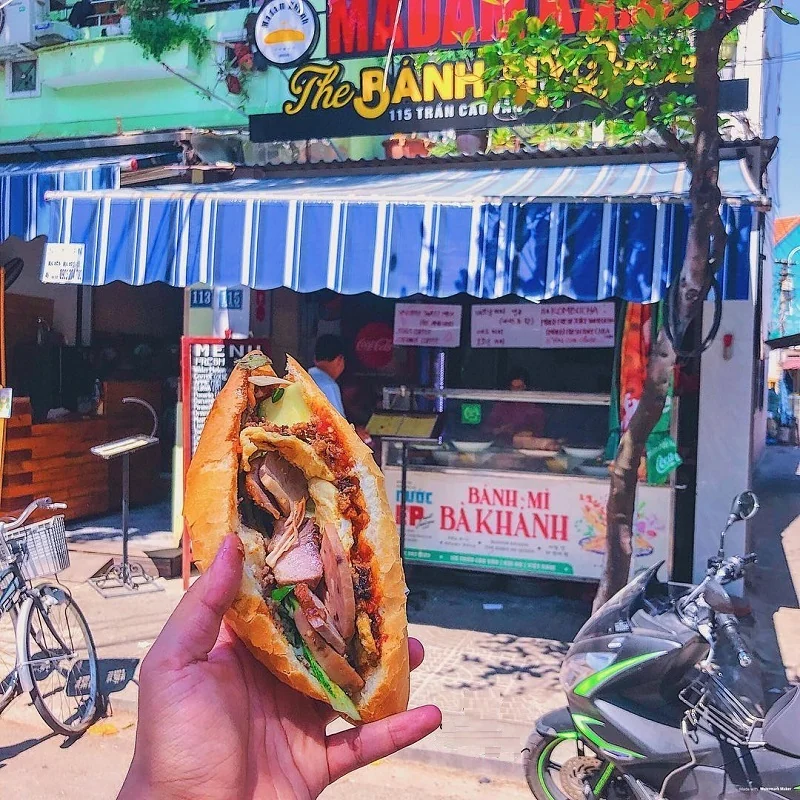
Another legendary name in Hoi An’s food scene, Madam Khanh attracts both Vietnamese and international visitors.
Its banh mi is known for its distinctive flavor and generous combination of fillings, making it another excellent choice for anyone eager to explore Hoi An’s famous street food.
Madam Khanh Banh Mi: 115 Tran Cao Van Street, Hoi An
Mot Herbal Tea 🍝
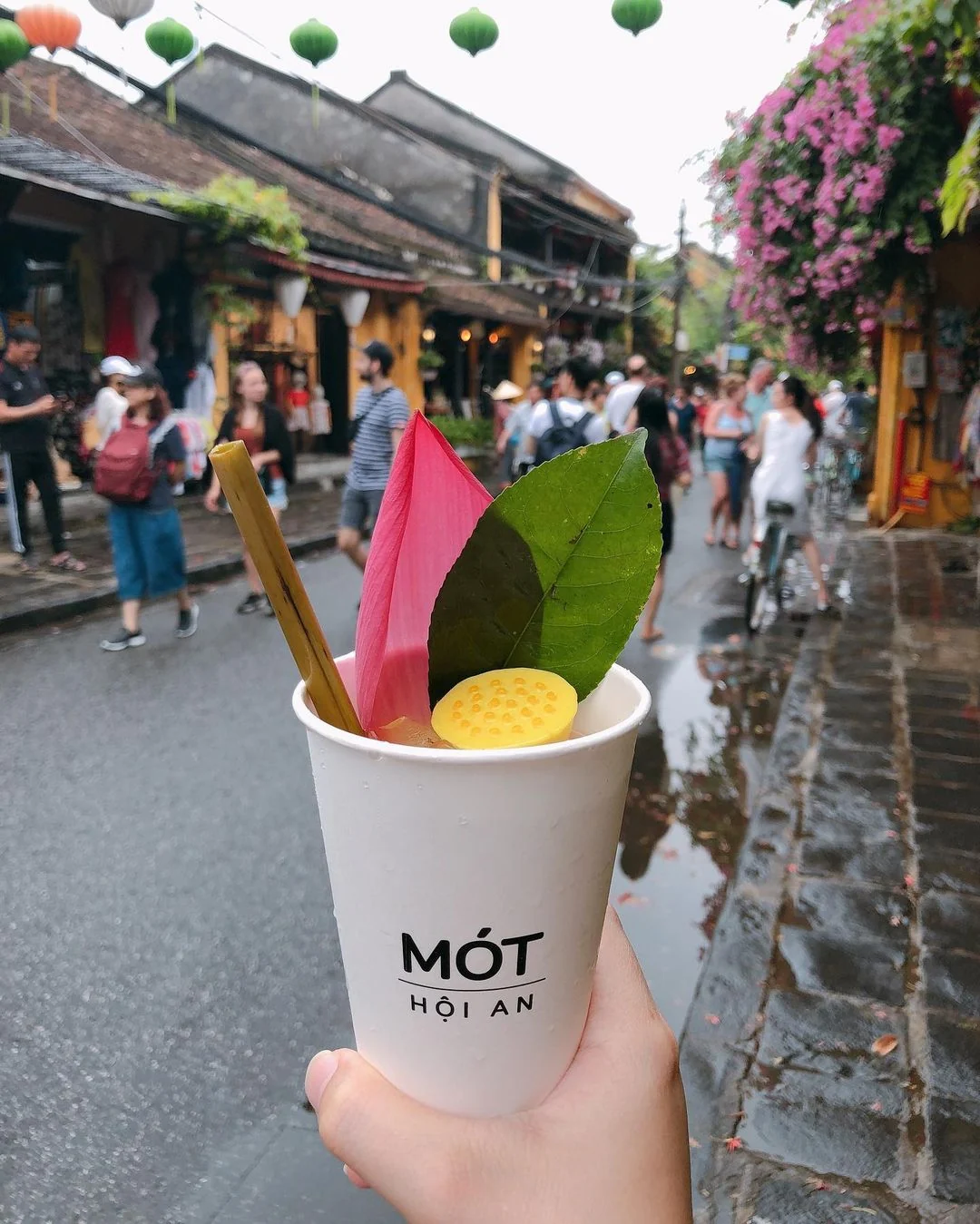
Mot is one of Hoi An’s most recognizable drinks. This refreshing herbal beverage is made with ingredients such as tea, ginger, and cinnamon, creating a mildly sweet and slightly tangy flavor.
Served chilled, it is particularly refreshing after a long walk through the Ancient Town.
Address: 150 Tran Phu Street, Hoi An
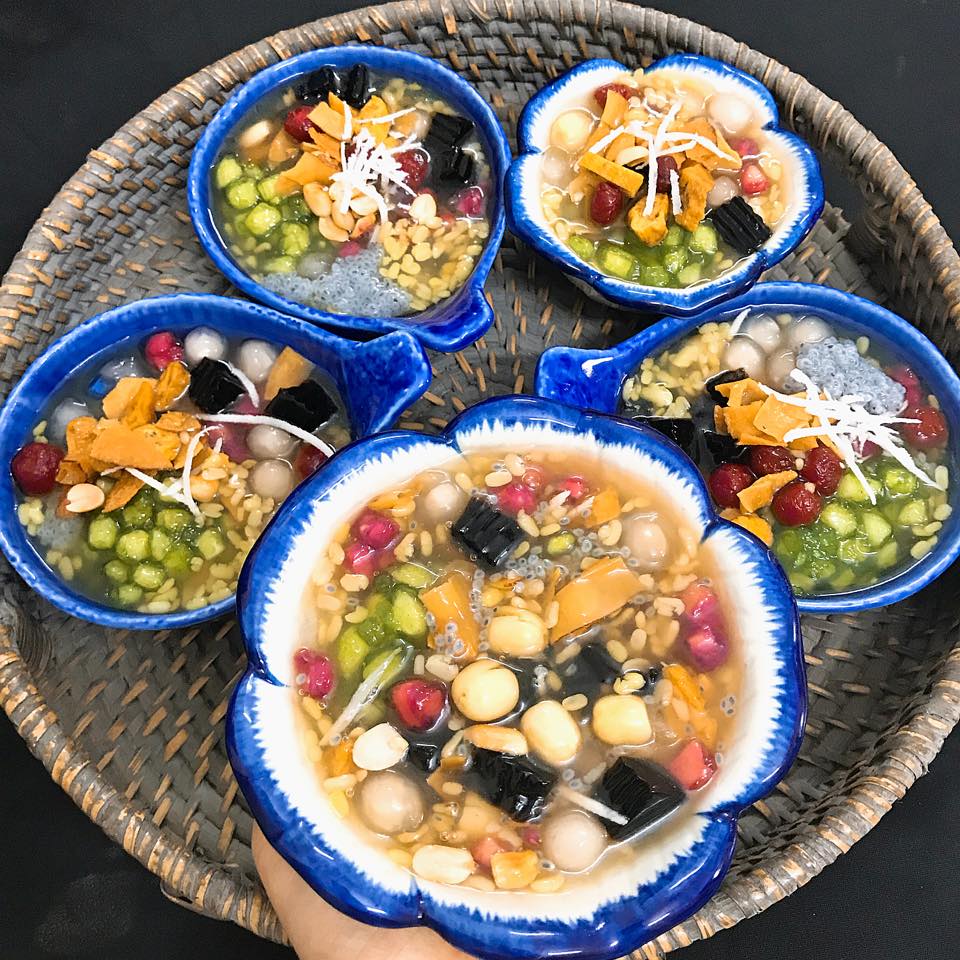
Hoi An Sweet Soups 🍝
Wondering what to eat in Hoi An? Don’t skip the local sweet soups!
Hoi An’s che desserts reflect the distinctive flavors of Central Vietnam and come in many varieties, including sweet corn soup, black sesame soup, black bean sweet soup, mung bean soup, and floating rice dumplings.
You can order one type on its own or ask for a mixed bowl featuring several different varieties together—a great option if you want to sample a little of everything.
Tau Hu – Vietnamese Silken Tofu Dessert 🍝
Known locally as tau hu or tau pho, this is a simple yet wonderfully comforting Vietnamese dessert.
The silky tofu is served warm or chilled with a delicate sweetness, creating a light and refreshing snack that is particularly enjoyable while wandering through the old streets of Hoi An.
Spicy Snails 🍝
Spicy snails are another popular snack in Central Vietnam and are also well known in nearby Da Nang.
One popular destination is Dien Phuong Snail Restaurant, about a 30-minute drive from Hoi An Ancient Town. The restaurant is known for its flavorful snail dishes and is particularly popular with locals.
For adventurous food lovers, this is one Hoi An food experience worth adding to the list.
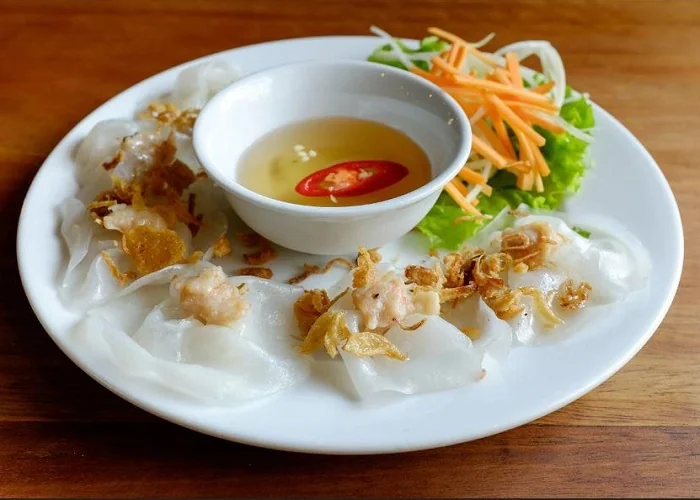
White Rose Dumplings 🍝
White Rose dumplings are among Hoi An’s most recognizable specialties.
Delicate and translucent, the dumplings are shaped to resemble small white rose petals. Beneath the soft, slightly chewy wrapper is a savory filling made from ingredients such as shrimp, pork, and mushrooms, seasoned with onion and fish sauce.
Beautiful to look at and delicious to eat, they are a classic Hoi An culinary experience.
Stir-Fried Baby Clams with Crispy Rice Crackers 🍝
Stir-fried baby clams are another specialty closely associated with Hoi An and the surrounding region.
The clams are stir-fried with onions and seasonings, then served with crispy rice crackers for dipping and scooping.
Another local favorite is Banh Dap, a simple but wonderfully satisfying combination of a soft steamed rice cracker layered with a crispy grilled rice cracker. It is typically served with fermented shrimp or fish sauce, creating a wonderfully salty, savory, and slightly spicy flavor.
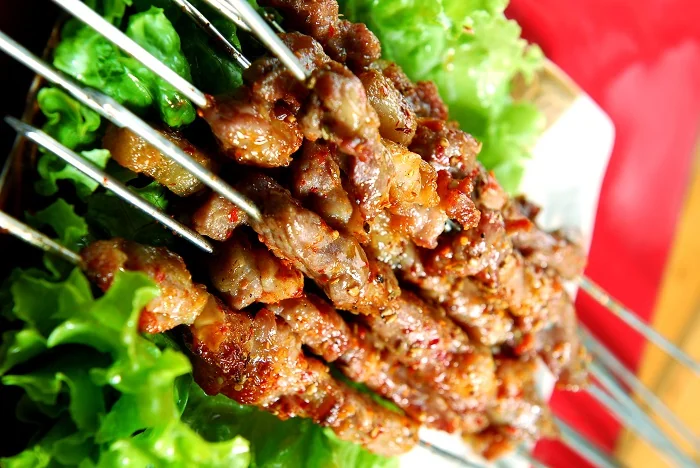
Grilled Meat Skewers & Nem Lui 🍝
Hoi An’s grilled meat skewers and nem lui are irresistible street-food favorites.
The meat is typically marinated with spices and red chili, giving the skewers an appetizing color and an enticing aroma as they grill over hot charcoal.
For anyone who enjoys casual street food, these smoky, flavorful bites are an experience you definitely should not miss.
Banh Beo in Small Bowls 🍝
Banh Beo is a familiar breakfast favorite among Hoi An locals.
These delicate steamed rice cakes are served in small individual bowls and topped with savory ingredients that create a wonderfully fragrant and satisfying combination.
If you want to try authentic Hoi An banh beo, it is best to go in the morning, as many vendors stop selling by lunchtime or evening.
🎏 Discovery: Top 25 Best Places to Visit in Hoi An, Vietnam
A Fun-Filled Independent Hoi An Itinerary
With so many attractions, food experiences, beaches, villages, and cultural sites to explore, planning an itinerary in advance can help you make the most of your time.
Here are some suggested itineraries for different trip lengths.
✴️ 2-Day, 1-Night Hoi An Itinerary
➡️ Day 1
- Explore Hoi An Ancient Town
- Relax at Cua Dai Beach
- Take a boat ride on the Hoai River and release colorful floating lanterns in the evening
➡️ Day 2
- Spend a fun-filled day at VinWonders Nam Hoi An
- Take a boat through River Safari to discover its wildlife attractions
- Pick up local specialties and souvenirs before heading home
✴️ 3-Day, 2-Night Da Nang–Hoi An Itinerary
➡️ Day 1
- Visit Linh Ung Pagoda
- Explore and enjoy the atmosphere of Hoi An Ancient Town
➡️ Day 2
- Relax and enjoy Non Nuoc Beach
- Explore Marble Mountains
- Visit Han Market in Da Nang
➡️ Day 3
- Spend the day at VinWonders Nam Hoi An, enjoying its modern rides and entertainment
- Shop for souvenirs and local specialties
✴️ 4-Day, 3-Night Da Nang–Hoi An–Hue Itinerary
➡️ Day 1
Explore Da Nang and check out some of the city’s highlights, including:
- My Khe Beach
- Da Nang Cathedral
- Asia Park’s World Wonders area
- Da Nang’s famous four major bridges
➡️ Day 2
Explore Hoi An Ancient Town and visit some of its most famous attractions, including:
- Chaozhou Assembly Hall
- Hoi An Market
- Thanh Ha Pottery Village
- Other historic landmarks around the Ancient Town
➡️ Day 3
Enjoy a full day of entertainment and attractions at VinWonders Nam Hoi An.
➡️ Day 4
Take the train to Hue and explore highlights such as:
- Hue Imperial City
- Truc Lam Bach Ma Zen Monastery
- Perfume River
- Other historic and cultural attractions in Hue
How Much Does a Trip to Hoi An Cost?
For travelers planning a 3-day, 2-night trip to Hoi An, here is a rough budget based on the expenses listed above:
-
Round-trip airfare: VND 1,000,000–1,500,000 per person from Hanoi or Ho Chi Minh City to Da Nang
-
Transportation between Da Nang and Hoi An: Around VND 500,000 per person
-
Hotel: Approximately VND 500,000–1,000,000 per night
-
Food and drinks: Around VND 600,000 per person
-
Souvenirs: Around VND 300,000 per person
-
Entrance fees and entertainment: Around VND 650,000 per person
-
Miscellaneous expenses: Around VND 300,000 per person
Overall, you can expect to spend approximately VND 4.5–5 million per person for a 3-day, 2-night Hoi An trip, although the actual cost will depend on your travel style, accommodation choices, activities, and whether you can take advantage of discounted airfares or other promotions.
For a destination as compact yet diverse as Hoi An, a well-planned trip can give you an incredible mix of heritage, local food, beaches, traditional crafts, riverside scenery, and unforgettable cultural experiences—all within just a few days.







Leave a Reply