Chau Doc, An Giang Travel Guide: Best Things to See and Do
Chau Doc, An Giang is a fascinating destination blessed with beautiful natural landscapes, centuries-old historical sites, and a rich cultural heritage shaped by several ethnic communities.
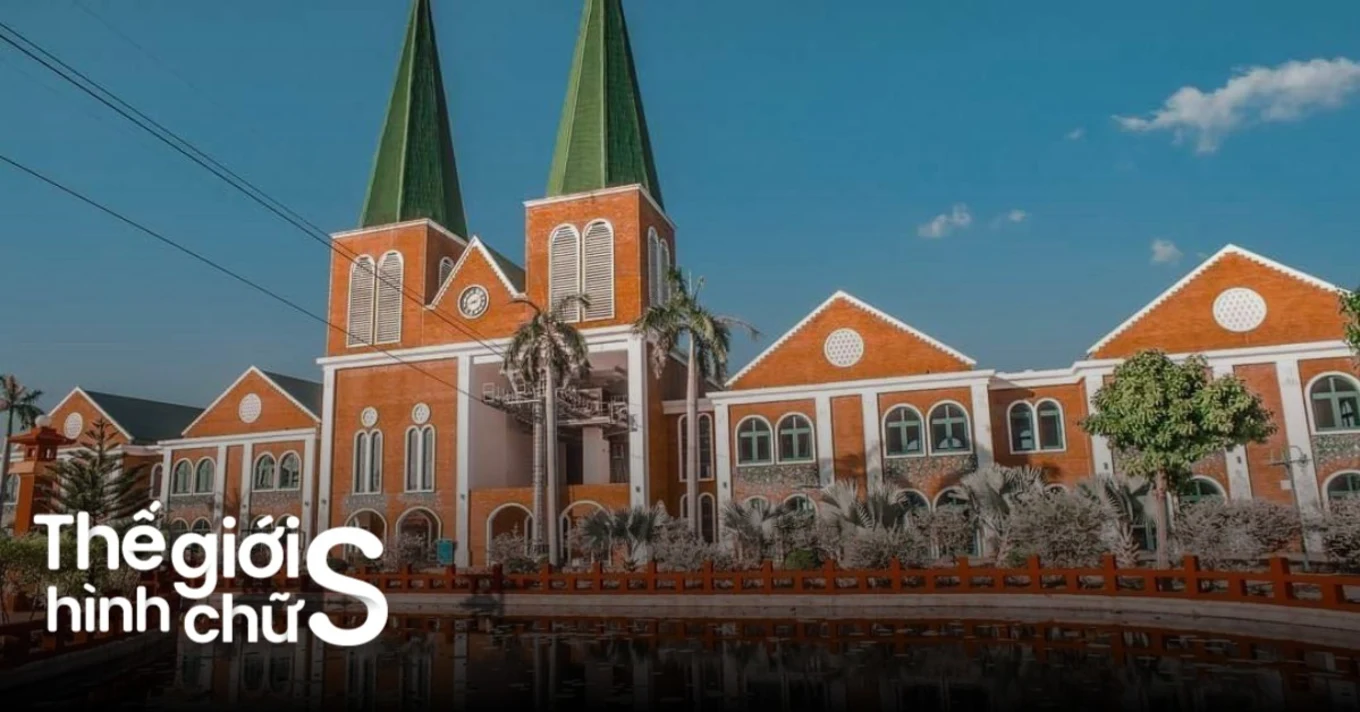
When you arrive in Chau Doc, you will be captivated by the peaceful waterways and the gentle flow of the Hau River. Small boats drifting along the river, tree-lined banks, and quiet waterways create a picturesque scene that blends beautifully with the surrounding countryside. Beyond the river, endless rice fields stretch toward the horizon, adding even more charm to the landscape.
But Chau Doc is more than just beautiful scenery. It is also a cultural and historical treasure, shaped by the traditions of several communities, including the Kinh, Chinese, Cham, and Khmer peoples.
One of its most famous landmarks is Ba Chua Xu Temple, a sacred place where locals and visitors come to pray, seek blessings, and find a sense of peace.
Where Is Chau Doc in An Giang?
Chau Doc is a city in An Giang Province, approximately 210 kilometers west of Ho Chi Minh City and close to the Cambodian border.
Located in the Mekong Delta, Chau Doc is surrounded by flat terrain, fertile land, and a tropical climate. Its diverse natural landscapes make it an appealing destination for travelers who want to experience the beauty and peaceful rhythm of life in the Mekong Delta.
Chau Doc’s location also makes it a convenient base for exploring other destinations in southern Vietnam. From here, you can easily travel to Can Tho, Long Xuyen, Cao Lanh, and other nearby provinces to discover different sides of the Mekong Delta.
How to Get to Chau Doc from Ho Chi Minh City
There are several ways to travel from Ho Chi Minh City to Chau Doc, including by private vehicle or intercity bus. The journey is more than 200 kilometers and generally takes around 5–6 hours, depending on traffic and road conditions.
By Private Vehicle
If you are driving or riding a motorbike from Ho Chi Minh City, there are two main routes you can consider.
The first route follows National Highway 62 through Hiep Binh, Hong Ngu, Tan Chau, and finally to Chau Doc.
The second route takes you along National Highway 1A toward My Thuan, followed by National Highway 80 through Sa Dec and the Vam Cong area to Long Xuyen, before continuing along National Highway 90 to Chau Doc.
The second route is particularly appealing if you want to experience more of the scenery and towns of the Mekong Delta along the way.
By Bus
For travelers who prefer public transportation, numerous bus companies operate routes between Saigon’s Western Bus Station and Chau Doc. Ticket prices generally range from around VND 150,000 to VND 200,000.
Popular operators include Phuong Trang, Hue Nghia, An Hoa Hiep, and Kim Kim Anh.
When Is the Best Time to Visit Chau Doc?
The best time to visit Chau Doc is generally from November to April.
During these months, the weather in Chau Doc and An Giang is typically more comfortable, with less intense heat and humidity. This makes it easier to explore the area’s natural landscapes, historical sites, temples, and outdoor attractions.
This period also coincides with a number of traditional festivals and cultural events in Chau Doc, giving visitors the opportunity to experience the region’s local traditions and spiritual culture.
What to Do in Chau Doc, An Giang? Best Places to Visit
1. Sam Mountain – Chau Doc
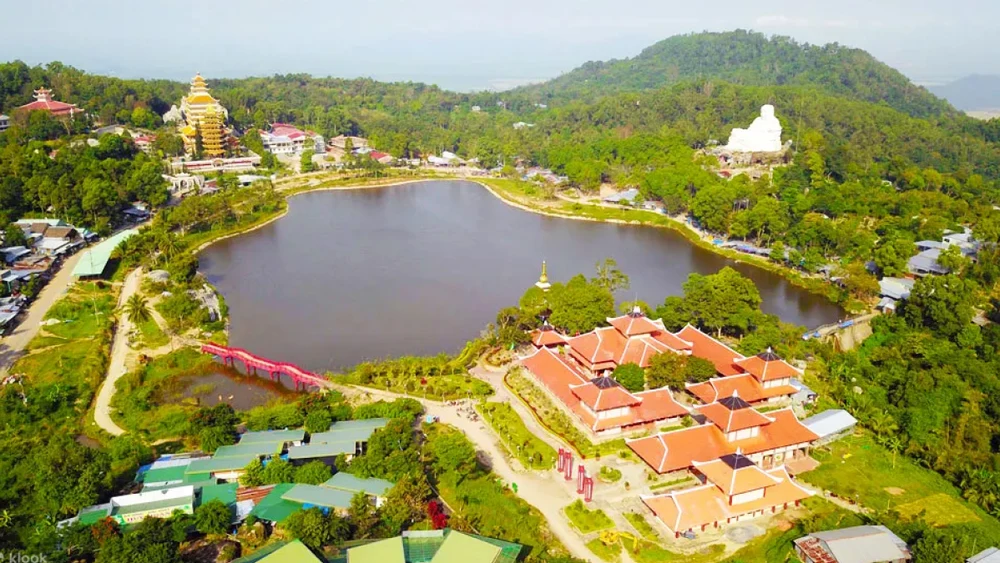
Rising approximately 284 meters above the surrounding plains, Sam Mountain is one of Chau Doc’s most important cultural and spiritual destinations.
What makes Sam Mountain particularly fascinating is the presence of nearly 200 temples, pagodas, shrines, and religious sites scattered from the foot of the mountain toward its summit. Together, they create a remarkable spiritual landscape featuring a variety of architectural styles.
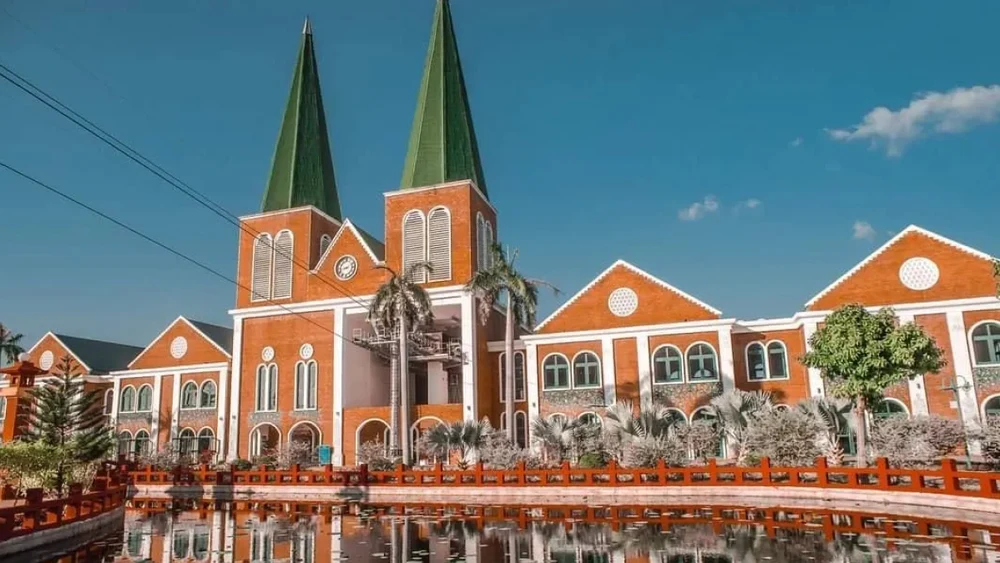
For local residents and Buddhist followers, Sam Mountain holds deep spiritual significance and is regarded as a sacred mountain associated with numerous important religious sites and traditions.
Many visitors come here in search of peace, tranquility, and a moment of reflection away from the bustle of everyday life.
Beyond exploring the temples and religious landmarks, you can also climb toward the mountain summit to enjoy panoramic views over the Mekong Delta. From above, the vast green countryside, rice fields, waterways, and distant villages create a peaceful landscape that captures the essence of southern Vietnam.
2. Ba Chua Xu Temple – Chau Doc’s Spiritual Landmark
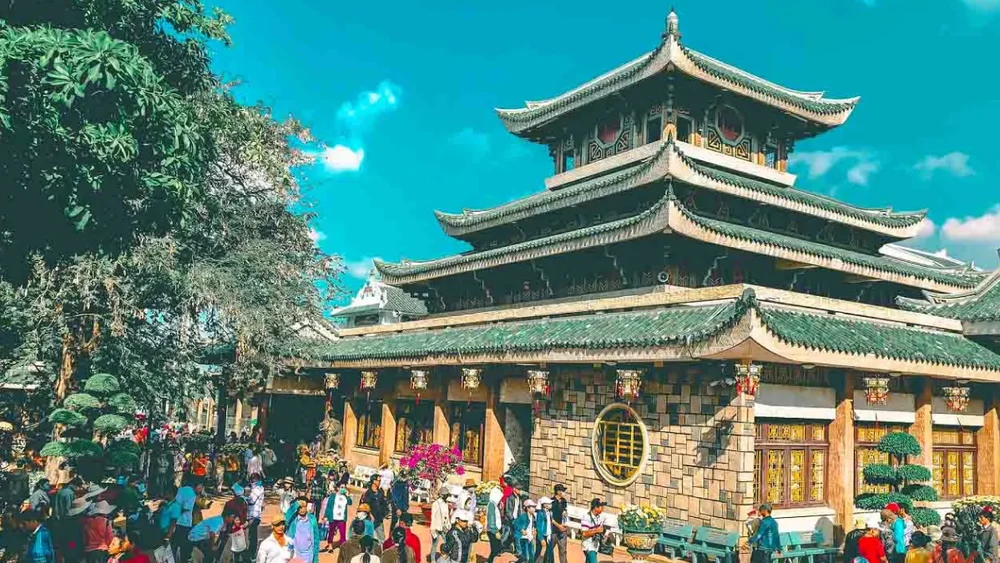
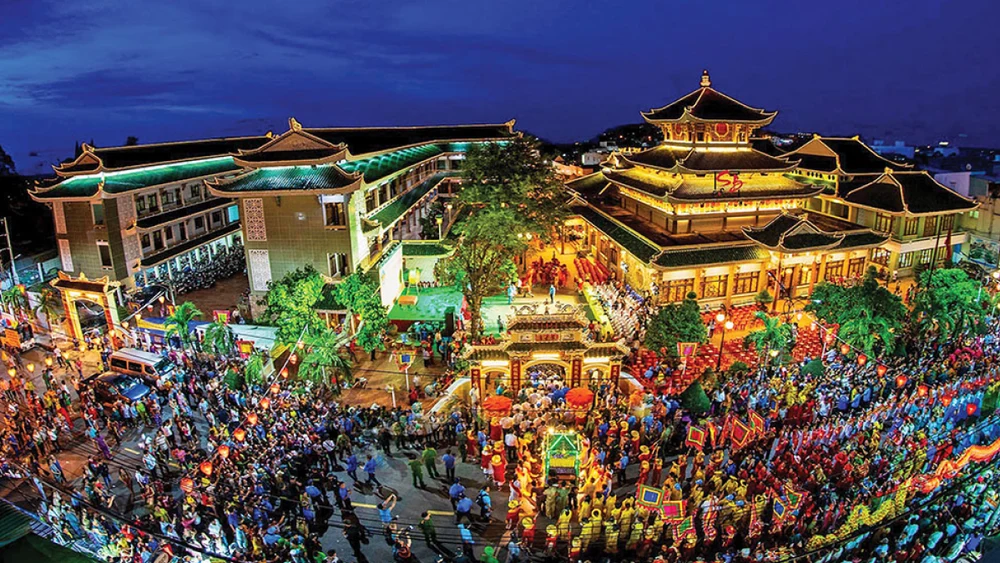
Located at the foot of Sam Mountain, Ba Chua Xu Temple is one of Chau Doc’s most important spiritual landmarks and a major destination for both pilgrims and travelers.
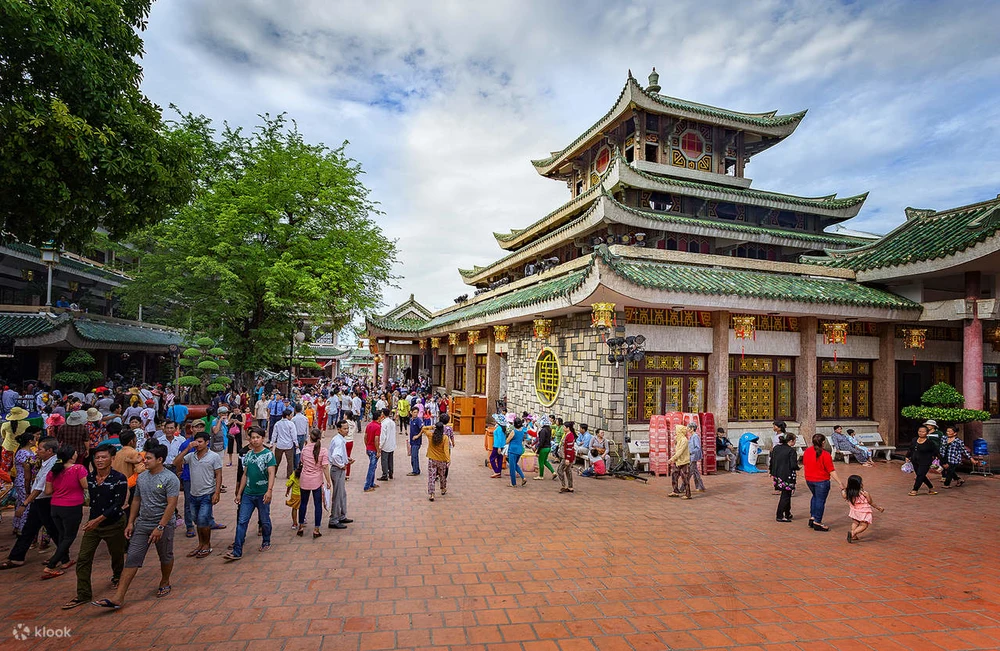
The temple is renowned for its distinctive architecture, featuring a layout inspired by the Vietnamese character “Quốc,” a lotus-shaped central structure, and a three-tiered roof covered with its characteristic blue tiles.
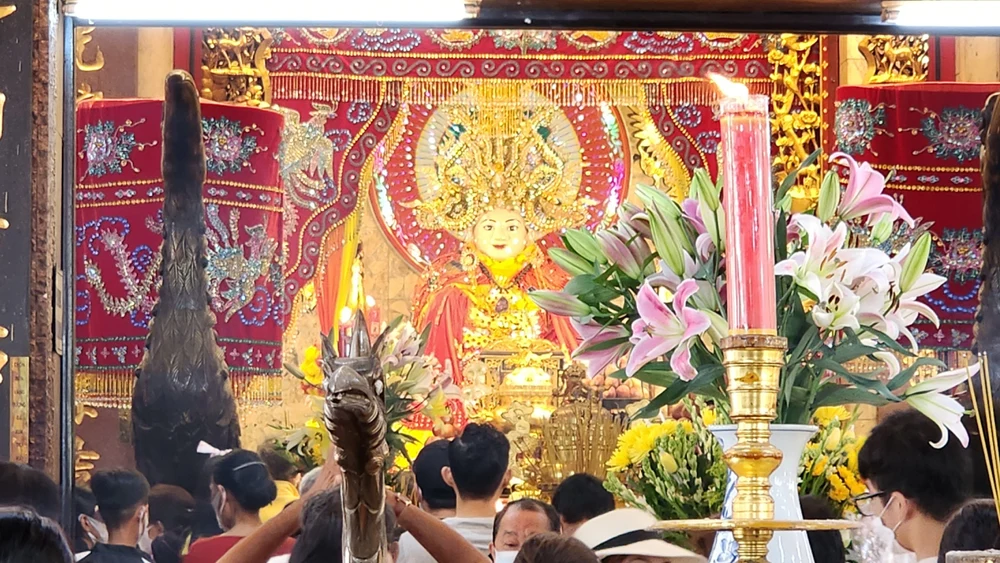
Beyond its architectural beauty, Ba Chua Xu Temple holds deep spiritual significance. Worship of Ba Chua Xu is closely connected with the Vietnamese tradition of Mother Goddess worship and attracts the devotion of both local residents and visitors from across the country.
Every year, the Ba Chua Xu Festival at Sam Mountain takes place from the 23rd to the 27th day of the fourth lunar month. During this important celebration, Chau Doc becomes filled with a solemn yet vibrant atmosphere as thousands of visitors gather to express their gratitude, pray for peace, and wish for good fortune.
For travelers interested in Vietnamese spirituality and local traditions, visiting Ba Chua Xu Temple offers a fascinating glimpse into one of the most deeply rooted cultural practices in the Mekong Delta.
3. Chau Doc Market – The “Mắm Capital” of the Mekong Delta
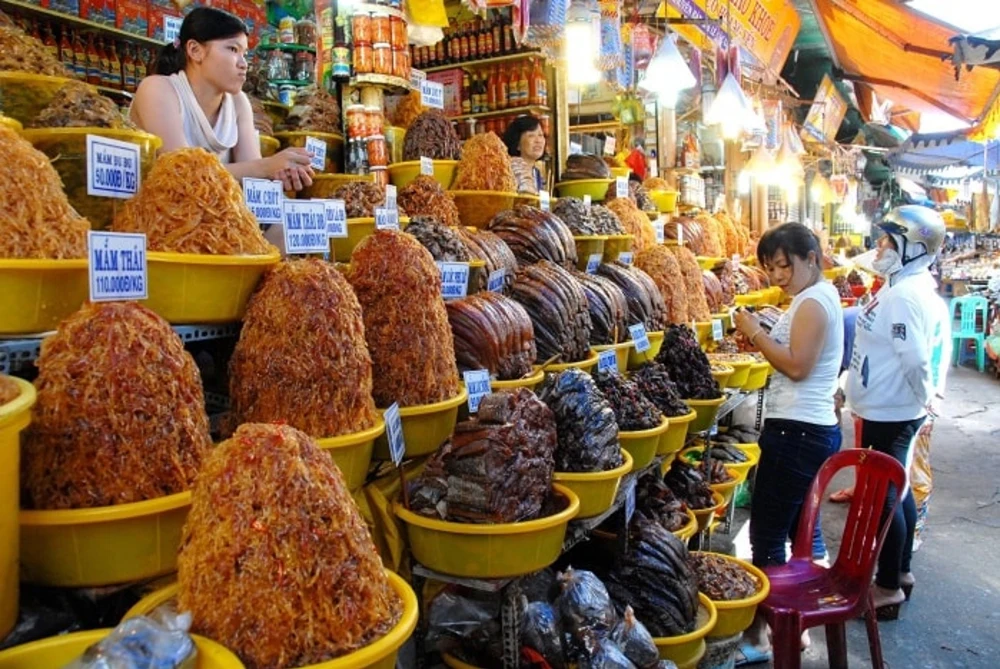
Chau Doc Market, also widely known as the Mắm Market, is a famous traditional market located in the heart of Chau Doc City. With a history spanning more than 200 years, the market is much more than a place to buy and sell goods—it is an important part of the local culture and everyday life.
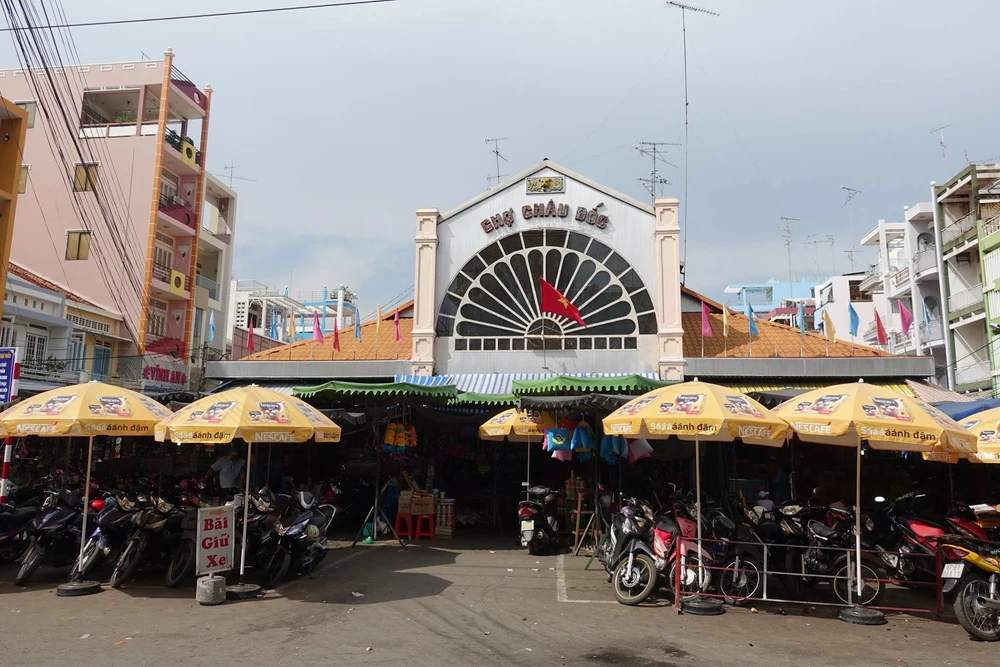
The market opens early, usually from around 5:00 AM. As you wander through its lively stalls, you will find everything from fresh fruits and vegetables, clothing, household goods, and electronics to a fascinating selection of local specialties.
Among them, mắm, or Vietnamese fermented fish paste, is undoubtedly the market’s most famous specialty. You can find many varieties, including fermented linh fish, chốt fish, snakehead fish, trèn fish, Thai-style fermented fish, and fermented ba khía crab.
With its incredible variety of flavors and traditional production methods, Chau Doc’s mắm has become a distinctive local specialty and a source of pride for the people of the region.
For food-loving travelers, a visit to Chau Doc Market is one of the best ways to experience the authentic flavors and vibrant everyday life of the Mekong Delta.
4. Phuoc Dien Pagoda – Hang Pagoda
Phuoc Dien Pagoda, better known as Hang Pagoda, is a unique Buddhist temple built on the slopes of Sam Mountain in Chau Doc.
The temple is nestled against the mountainside and blends harmoniously with its natural surroundings. With a history of more than a century, Phuoc Dien Pagoda carries deep cultural and spiritual significance.
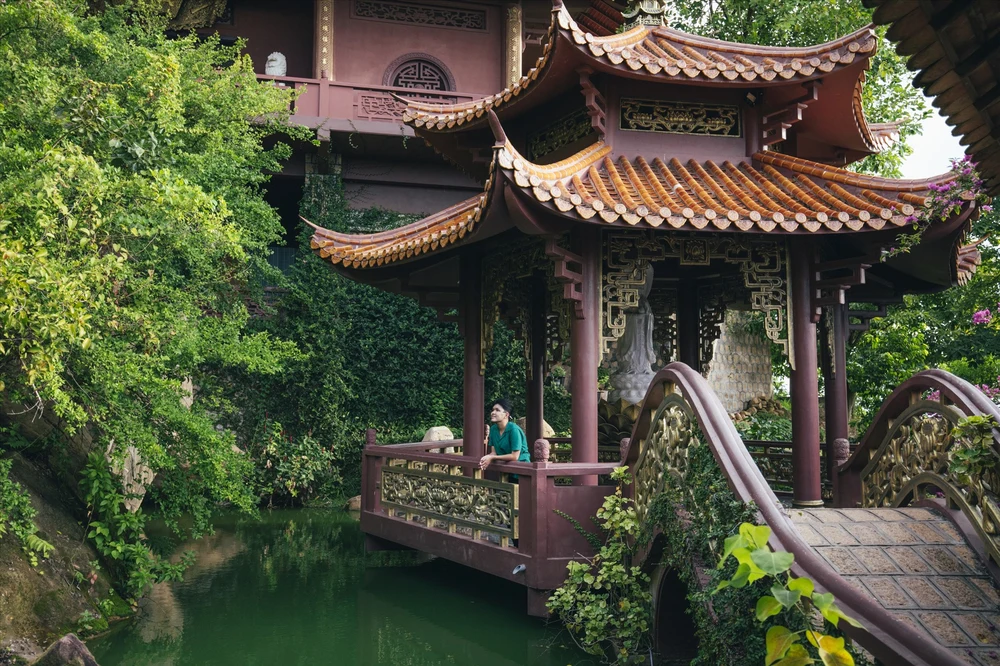
Built across several levels, the pagoda features a distinctive and historic architectural style. Each level is carefully arranged according to principles of balance and harmony, creating an elegant and picturesque setting on the mountain.
Beyond its architectural beauty, Hang Pagoda is known for its peaceful and sacred atmosphere. Surrounded by ancient structures and natural scenery, it offers a quiet place where visitors can slow down, reflect, pray, and find a sense of inner peace.
5. Tay An Ancient Pagoda
Built in 1820, Tay An Ancient Pagoda is a Northern Buddhist temple located in Chau Doc, An Giang. The temple is considered an architectural symbol of cultural exchange between Vietnam and India.
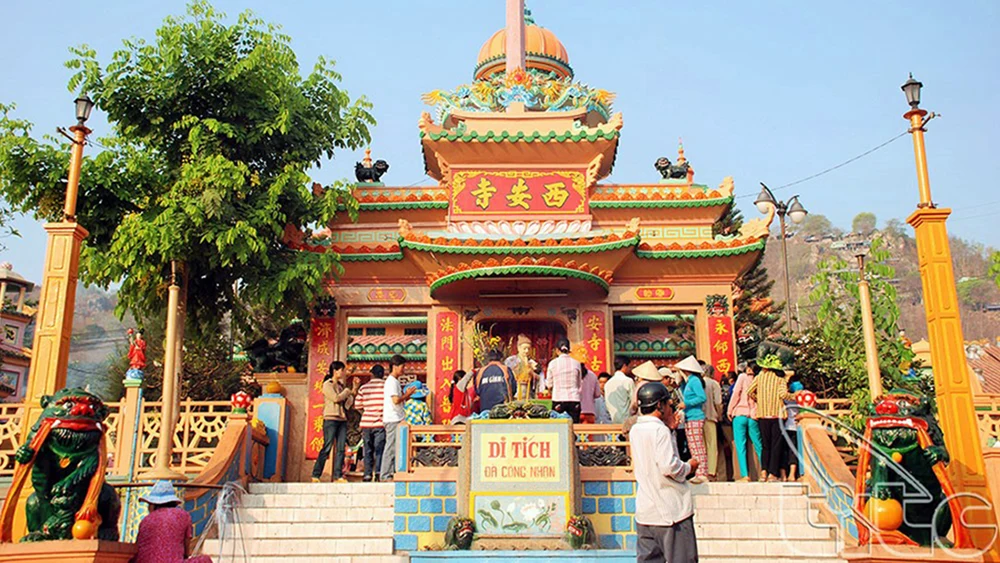
Covering an area of more than 15,000 square meters, Tay An Ancient Pagoda is an impressive example of distinctive religious architecture. One of the most striking features within the complex is a group of three ancient towers, each topped with rounded, onion-shaped roofs painted in vivid yellow.
The architecture displays strong Indian influences, with intricate decorative motifs and carefully crafted details creating a spiritual atmosphere unlike many other temples in the Mekong Delta.
Beyond its architectural beauty, Tay An Ancient Pagoda is also a place where visitors can experience the cultural and spiritual traditions of the region. Take your time to explore the temple grounds, enjoy the peaceful surroundings, and immerse yourself in the quiet atmosphere of this historic religious site.
6. Thoai Ngoc Hau Tomb
Thoai Ngoc Hau Tomb, also known as Son Lang, is one of the most notable historical and architectural landmarks in Chau Doc, An Giang.
Built in a traditional architectural style, the tomb complex has an impressive and dignified appearance. High surrounding walls enclose the site, creating a quiet and secluded atmosphere that sets it apart from the surrounding city.
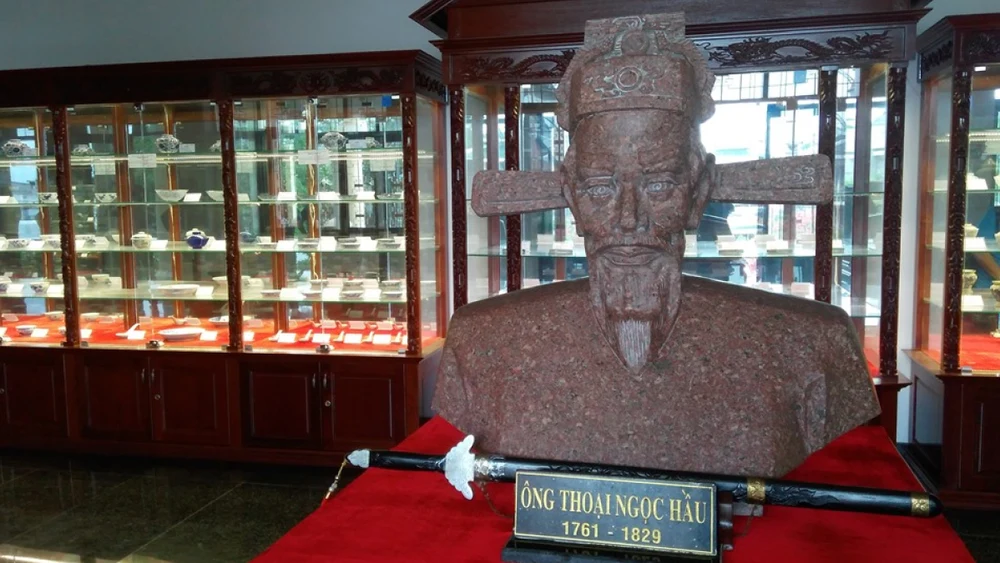
Inside the complex stands an intricately decorated temple featuring refined architectural details and traditional artistic craftsmanship. The temple has a grand and solemn appearance, with one of its most notable features being a carefully carved bust of Thoai Ngoc Hau, standing approximately two meters tall.
The site offers visitors an opportunity to learn more about the history of Chau Doc while appreciating the traditional architecture and craftsmanship preserved within this historic complex.
7. Chau Phu Communal House
Chau Phu Communal House is an important historical, cultural, and religious landmark that should not be missed when exploring Chau Doc, An Giang.
Covering an area of approximately 240 square meters, the communal house attracts visitors with its traditional architecture and peaceful atmosphere.
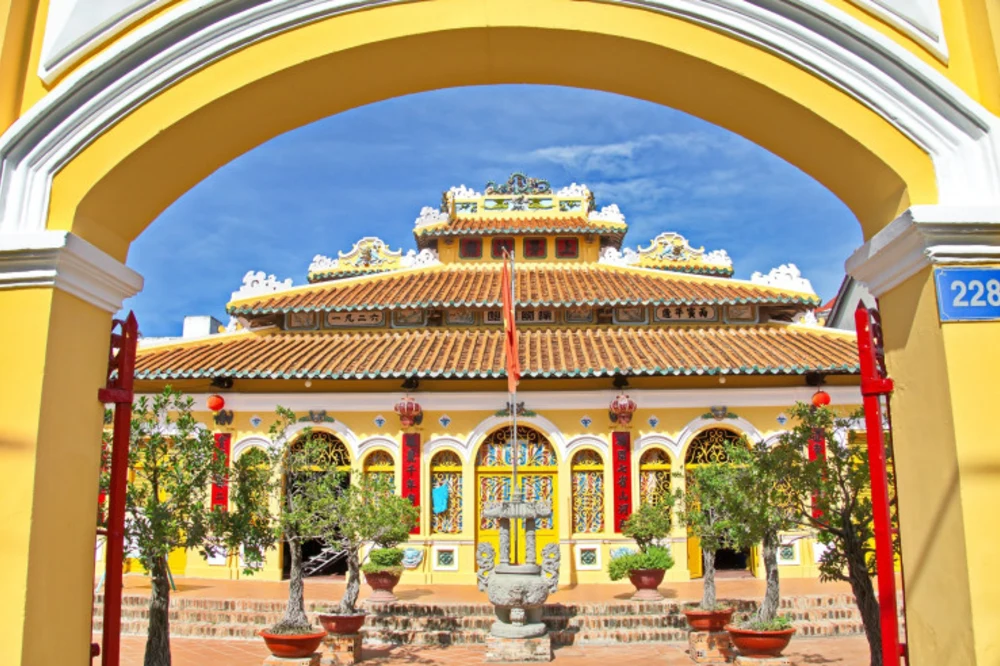
The building follows a traditional Vietnamese “tam” layout, featuring a multi-tiered roof and distinctive layered eaves. The roofs are covered with traditional tiles, while the courtyard is paved with decorative tiles. The walls were constructed using traditional brick and lime mortar, while the main columns are made from durable local hardwood.
The communal house is surrounded by a sturdy protective wall. Inside the grounds, large old trees provide welcome shade and create a tranquil atmosphere.
At the two corners of the courtyard are the Ngu Hanh Shrine and Son Quan Shrine, representing the local tradition of honoring and worshipping spiritual deities.
The three-entrance gate is another architectural highlight, featuring three curved red-tiled roofs decorated with traditional dragon motifs.
For travelers interested in traditional Vietnamese architecture and local spiritual culture, Chau Phu Communal House offers a fascinating glimpse into the heritage of the Mekong Delta.
8. Basa Fish Monument
The Basa Fish Monument is one of the more distinctive landmarks in Chau Doc, featuring a carefully crafted and lifelike representation of a large basa fish.
The monument stands on a tall pedestal, creating an impressive silhouette that can be seen from a distance. Its bright and vibrant appearance symbolizes the vitality and prosperity of the region.
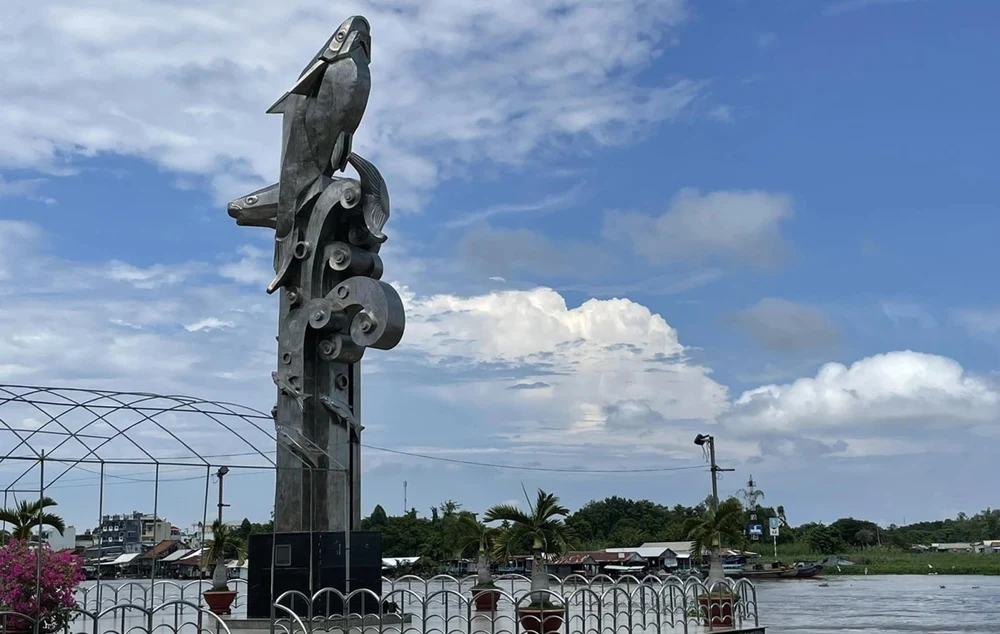
The monument is more than just a piece of public art. It also represents the cultural and economic importance of basa fish farming, an industry that has long provided an important source of income for local communities in the Mekong Delta.
Today, the Basa Fish Monument has become a popular stop for visitors, offering a unique photo opportunity and a memorable symbol of Chau Doc’s connection with the river and its fishing heritage.
9. Tra Su Cajuput Forest – A Lush Wetland Escape in An Giang
Although located in Tinh Bien, approximately 25 km from Chau Doc city center, Tra Su Cajuput Forest is a must-visit destination for anyone exploring Vietnam’s Mekong Delta. The journey takes around 40–50 minutes by motorbike or car, leading you to a vast green wetland with a distinctive ecosystem characteristic of the Seven Mountains region.
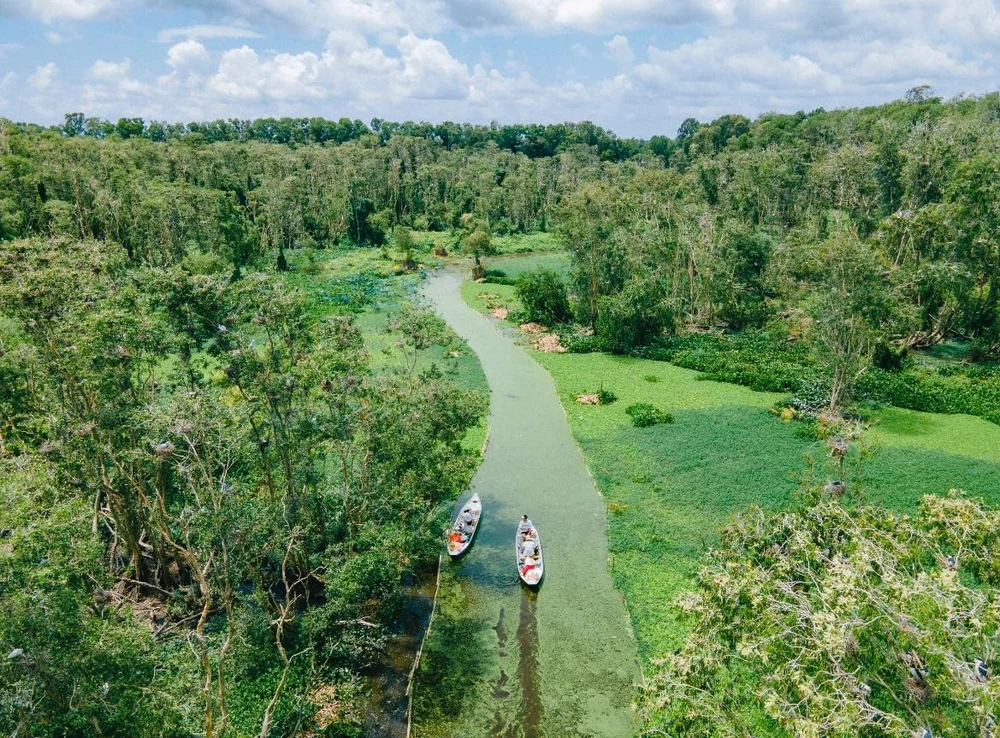
The highlight of Tra Su is a boat trip through its winding waterways aboard a tac rang, a small motorized boat commonly used in the Mekong Delta. Glide gently across water covered with floating greenery, with rows of cajuput trees lining both banks and birdsong echoing through the forest. The peaceful atmosphere makes this an ideal escape from the busy pace of city life.
Be sure to stop at the long wooden walkway that stretches through the forest for memorable photos, and climb the observation tower to enjoy panoramic views of the lush canopy from above.
Another interesting fact is that Tra Su Cajuput Forest served as a major filming location for the Vietnamese movie Dat Rung Phuong Nam (Southern Land). Its pristine landscapes, romantic waterways, and distinctly Southern Vietnamese character helped create some of the film’s most evocative scenes.
Famous Local Specialties in Chau Doc
A trip to Chau Doc would not be complete without sampling its local cuisine and discovering the regional specialties that make this Mekong Delta city famous. From flavorful noodle soups to distinctive fermented fish products, here are some dishes and treats worth trying or taking home as souvenirs.
Chau Doc Fish Noodle Soup (Bun Ca Chau Doc)
One of Chau Doc’s signature dishes, bun ca features rice vermicelli served with fresh fish, a richly flavored broth, and fresh herbs and vegetables. Its distinctive taste reflects the culinary traditions of the Mekong Delta, making it a favorite among both locals and visitors.
Seven-Style Beef at Sam Mountain (Bo Bay Mon Nui Sam)
This local specialty features beef prepared in seven different styles, which may include hot pot, grilled beef, and stir-fried dishes. Each preparation offers its own unique flavors, creating a satisfying meal for anyone eager to explore the region’s cuisine.
Chau Doc Siamese Sticky Rice (Xoi Xiem)
A popular breakfast treat among locals, xoi xiem is made with glutinous rice and commonly served with rich coconut milk and mashed mung beans. Its soft texture and sweet, creamy flavor make it a delicious way to start the day.
Palmyra Palm Fruit (Thot Not)
Palmyra palm fruit is a well-known specialty of An Giang. The fruit has a brown outer skin and a thin yellowish layer beneath it, surrounding soft, smooth, white flesh with a refreshing, mildly sweet taste. Enjoy it fresh or look for local palmyra palm products to bring home as souvenirs.
Fermented Fish Specialties (Mam)
Chau Doc is widely known for its diverse range of fermented fish products, collectively called mam. Popular varieties include fermented linh fish, gourami fish, anchovies, and fermented ba khia crab. These products have distinctive flavors and play an important role in many traditional dishes across the Mekong Delta.
If you plan to buy mam as a gift, choose a properly sealed product and check the packaging requirements before traveling internationally, particularly if you are carrying food across borders.
Recommended Hotels and Guesthouses in Chau Doc, An Giang
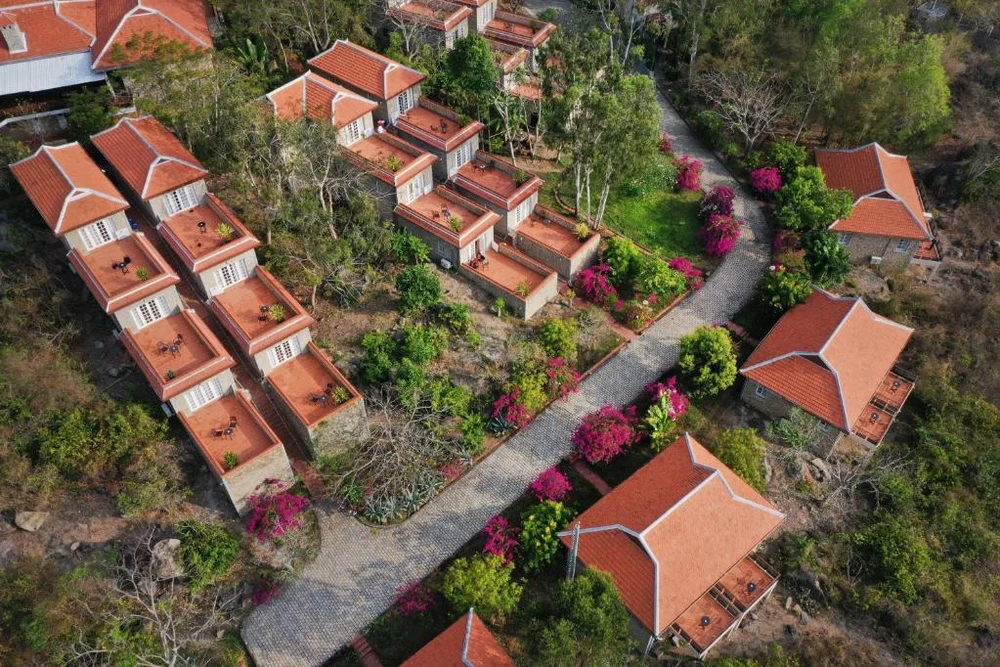
Planning an exciting trip to Chau Doc? Choosing comfortable accommodation can make your journey even more enjoyable. Here are five hotels and hostels to consider when arranging your stay.
- Hung Cuong Hotel
Address: 96 Dong Da Street, Chau Doc City.- Little Saigon Hostel
Address: 190 Bo Tay, Hoang Dieu Street, Chau Doc City.- Victoria Nui Sam Lodge
Address: Vinh Dong 1, Chau Doc City.- Victoria Chau Doc Hotel
Address: 1 Le Loi Street, Chau Doc City.- Dang Loi Hostel
Address: 187 Nguyen Tri Phuong Street, Chau Doc City.
Consider checking recent guest reviews, room availability, and current prices before booking, as accommodation details may change.
Conclusion: Is Chau Doc, An Giang Worth Visiting?
Absolutely! Chau Doc is an appealing destination where beautiful natural landscapes, fascinating historical landmarks, spiritual traditions, and distinctive Mekong Delta cuisine come together. From the sacred sites of Sam Mountain and the vibrant local market to the tranquil waterways of Tra Su Cajuput Forest, the city offers plenty of opportunities to experience a different side of Vietnam.
Whether you are interested in cultural discovery, nature, local food, or a peaceful escape from the crowds, Chau Doc has something to offer. Make Chau Doc, An Giang a stop on your next journey through the Mekong Delta and discover the charm of Vietnam’s river country for yourself.





Leave a Reply